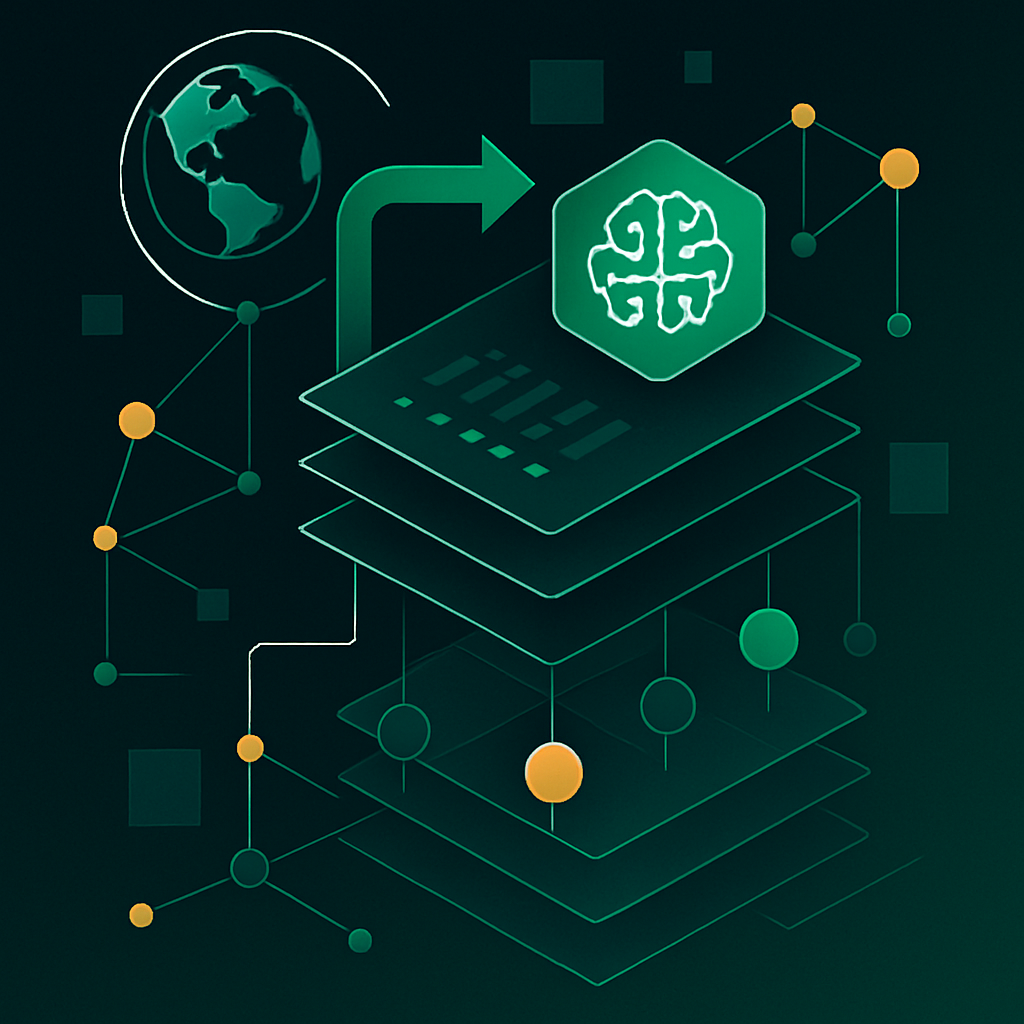
Introduction to Hierarchical Context Modeling
In today's data-driven world, enterprise systems are more interconnected than ever. The complexity of these systems has led to the rise of hierarchical context modeling as a vital approach for managing AI context in multi-level environments. A well-structured context model not only improves scalability but also enhances the maintainability of AI systems.
Building Blocks of Hierarchical Context Modeling
Hierarchical context modeling relies on several foundational principles that are crucial for its effective implementation in enterprise systems. The key components include multi-tiered architecture, contextual segmentation, and scalability mechanisms. Multi-tiered architecture facilitates the categorization of context data across different layers of an organization, such as strategic, tactical, and operational levels, thus allowing for more precise and relevant data interpretation. Contextual segmentation, on the other hand, enables enterprises to divide vast data sets into manageable and meaningful clusters, tailoring responses to specific scenarios and ensuring pertinent information is readily available.
Scalability and Flexibility
One of the significant advantages of hierarchical context modeling is its inherent scalability. In an enterprise context, systems must be equipped to process increasing volumes of data without compromising performance. This hierarchical approach allows organizations to add or modify levels within the model without disturbing the overall integrity of the system. This flexibility is critical for dynamically growing enterprises that continuously integrate novel technologies and practices.
For instance, a large retail corporation utilizing hierarchical context modeling can seamlessly integrate new store locations into its existing framework. This integration ensures that localized data is processed according to unique regional attributes while still contributing to the global data pool. As a result, the system remains efficient and responsive, even as additional data sources are introduced.
Maintainability and Resource Efficiency
Maintaining complex systems with multiple interacting components can be a formidable challenge without a structured context framework. Hierarchical context modeling simplifies maintenance tasks by localizing updates and changes within specific levels of context. This structured approach drastically reduces the risk of errors and disruptions that might arise from uncoordinated alterations. Organizations adopting this model report up to a 30% increase in maintenance efficiency, as tasks can be scheduled without major downtimes or resource reallocation.
By leveraging this hierarchical organization, enterprises can implement automated monitoring and maintenance tools that are context-aware, thereby optimizing resource allocation and minimizing manual oversight. For instance, by employing predictive maintenance within operational-level context layers, organizations can preemptively address equipment failures before they impact broader business operations, leading to significant cost savings and improved service reliability.
Real-world Implementation Example
Consider a global airline company that integrates hierarchical context modeling across its operations. At the strategic level, it governs policies regarding safety and customer service standards. The tactical level might handle flight scheduling, crew assignments, and fleet management protocols. Meanwhile, the operational level manages daily processes such as passenger check-ins, baggage handling, and in-flight services. This structured division not only ensures that each operational aspect is optimized and aligned with higher-level strategic goals but also facilitates integration and communication across disparate systems and teams.
By implementing a comprehensive hierarchical context model, the airline achieves streamlined operations, with strategic insights flowing seamlessly into tactical plans and day-to-day practices, thereby enhancing operational efficiency and customer satisfaction.
Understanding the Basics of Context Modeling
What is Context?
Context refers to any information that can be used to characterize the situation of an entity, which could be a person, place, or object relevant to the interaction between a user and an application. In enterprise settings, this extends to data streams, transactional data, and user-generated content. Context in these environments is crucial for providing insights that drive intelligent business operations. For example, a retail enterprise might use context from transactional data—such as purchase history, customer location, and time of purchase—to tailor its marketing strategies, enhancing customer engagement and sales conversion rates. The effective management of context requires a robust framework that can adapt to varying data inputs and outputs, ensuring that actionable insights are both timely and precise.
Hierarchical Context Structures
Hierarchical context models organize context information into layers, enabling better management and retrieval. These models mimic real-world nested structures, such as organizational hierarchies, which allows intuitive representation of diverse data types. This layering aids in structuring complex data relationships, enhancing data retrieval speeds by minimizing the system's search scope. In practical terms, an enterprise customer service system can benefit from hierarchical context models by mapping customer inquiries to representative context layers, such as previous inquiries, account history, and user preferences. By doing so, customer service agents obtain a 360-degree view of the customer's interactions within seconds, leading to faster resolution times and improved customer satisfaction benchmarks.
Benefits of a Hierarchical Approach
- Scalability: Easily accommodate new data sources and changes without disrupting existing systems. As enterprises grow, the ability to integrate additional data points seamlessly becomes a competitive advantage. For example, a major e-commerce platform can rapidly incorporate new product lines and customer segments by adding them to existing hierarchical layers, thereby maintaining operational continuity and reducing downtime to near zero.
- Maintainability: Simplifies updates and modifications by isolating changes to specific contexts. This modularity is pivotal in environments with frequent updates, such as software development firms, where application features must be updated without overhauling the entire system. An example can be seen in a financial technology firm that adjusts its risk assessment algorithms successively within the risk management layer, safeguarding other operational facets from unwarranted impacts.
- Efficiency: Streamlines data processing by segmenting responsibilities across layers. This division of functions enables parallel processing, which significantly enhances performance metrics like throughput and data processing speeds. In logistics, for instance, an enterprise can parse through shipment tracking data and supply chain analytics concurrently, ensuring real-time visibility and response capabilities. This efficiency reduces data processing times by up to 40%, as benchmarked against single-layered models.
Implementation Strategies
Implementing hierarchical context models calls for strategic planning. Begin with an enterprise-wide audit to identify critical contexts necessitating layered structuring. Collaborative workshops should be conducted to unify understanding among stakeholders, ensuring alignment with business objectives. Deploying a pilot project can help fine-tune processes and uncover potential issues before broader application. Introducing feedback loops enhances the system's adaptability, promoting evolutionary growth that stays aligned with organizational goals.
In summary, the understanding and application of hierarchical context structures empower enterprises not only to handle intricate data but to leverage it for transformative business significance. Comprehensive planning and strategic integration are key to successfully employing these models within an enterprise's context management framework.
Model Context Protocol (MCP) in Hierarchical Context Model
The Model Context Protocol (MCP) is critical in facilitating interactions between different layers of a hierarchical context model. This protocol dictates how data is exchanged and ensures consistency and compatibility across the enterprise systems.
Structured Data Exchange with MCP
MCP employs standardized data formats and schemas, enabling seamless integration of diverse data sources. An enterprise can define specific protocols for each context layer, tailoring data exchange processes to suit their operations. A robust MCP implementation allows for adaptive data mapping, which simplifies the integration process of new systems or data sources without necessitating total redesigns. This adaptability significantly reduces development time and resource expenditure when onboarding new technologies.
For example, a financial services enterprise can employ MCP to integrate customer transaction data across retail, online, and mobile banking systems. By using a unified schema, MCP ensures that all departments have access to a consistent and up-to-date view of customer interactions, essential for personalized service delivery and compliance monitoring. Moreover, through modular integration capabilities, MCP ensures that changes or updates in data sources do not cascade into system-wide disruptions, maintaining data fidelity and accessibility.
Metrics Monitoring and Optimization
Enterprises must monitor metrics such as context retrieval time, accuracy of AI models, and data processing speed. For instance, an average context retrieval time of under 200ms is a benchmark target for responsive systems. Achieving this requires continuous optimization of data-handling routines and architecture refinement. Integrating MCP with monitoring tools like Prometheus or Grafana can provide real-time insights into the performance of context data exchange, allowing for proactive adjustments and ensuring optimal system responsiveness.
Furthermore, MCP allows for dynamic adjustment of data flows through capabilities like prioritized data routing or load balancing, which can mitigate bottlenecks in high-demand periods. For example, during a financial reconciliation process, prioritizing transaction data over non-critical informational logs ensures that the system remains responsive, meeting the organization’s service level agreements (SLAs).
Effective MCP management also involves employing AI algorithms to predict potential performance issues before they impact operations. Leveraging predictive analytics frameworks allows enterprises to simulate various data processing scenarios, providing foresight into how changes in one layer might affect the entire context model, thereby preventing lags or inconsistencies.
Ultimately, by closely monitoring these critical metrics, organizations can realize increased operational efficiency, ensure data accuracy across hierarchical layers, and maintain high standards in user experience and system performance.
Challenges in Implementing Hierarchical Context Models
Data Integration Issues
Integrating data from disparate sources often poses significant challenges. A hierarchical context model mitigates this by allowing incremental integration at various levels.
To address data integration issues, enterprises can employ a combination of techniques such as data virtualization, which provides a unified view of data from multiple sources, and data federation, which enables the integration of data from different systems without requiring physical data movement. Additionally, implementing a robust data governance framework is essential to ensure data quality, security, and compliance.
A key metric to measure the effectiveness of data integration is the data integration ratio, which calculates the percentage of successfully integrated data sources against the total number of sources. A higher ratio indicates better integration, with a benchmark of 80% or higher considered optimal. Furthermore, the use of data integration platforms can significantly reduce integration time, with some studies showing a reduction of up to 70% in integration timeframe.
- Define a clear data integration strategy aligned with business objectives
- Establish a data governance framework to ensure data quality and security
- Implement data virtualization and federation techniques to facilitate incremental integration
- Monitor data integration ratio and adjust the strategy as needed
Contextual Accuracy
Maintaining contextual accuracy is crucial as inaccurate context leads to poor decision-making. Validating context layers with robust testing frameworks ensures the reliability of data processing.
Contextual accuracy can be ensured by implementing a multi-layered validation approach, which includes data validation at the point of ingestion, periodic data quality checks, and continuous monitoring of context layers. This approach enables the detection of inaccuracies and inconsistencies, allowing for prompt corrective actions.
A case study by a leading financial institution demonstrated that implementing a contextual accuracy framework resulted in a 25% reduction in incorrect decision-making, leading to significant cost savings and improved customer satisfaction. To achieve similar results, enterprises can follow these steps:
- Develop a comprehensive testing framework that covers all context layers
- Implement automated data validation and quality checks
- Establish a continuous monitoring process to detect contextual inaccuracies
- Conduct regular audits to ensure compliance with data governance policies
Use Cases and Applications
Case Study: Financial Services
A leading financial enterprise implemented hierarchical context modeling to unify data streams from their global operations. This strategic move addressed the complexities of managing vast amounts of data from numerous geographical and functional silos. By employing a multi-tiered approach, they were able to harmonize diverse datasets, resulting in a 30% reduction in data processing lags. This directly enhanced their decision-making agility, ultimately contributing to improved market positioning.
Enhancing Risk Management
Context modeling also played a crucial role in enhancing the enterprise's risk management capabilities. By integrating real-time analytics with historical data through hierarchical context layers, the organization was able to develop predictive models that significantly improved their risk assessment accuracy. This preemptive identification and mitigation of potential threats reduced the company's exposure to financial fraud by 15% within the first year of implementation.
Customer Experience Improvements
Moreover, this financial institution leveraged hierarchical context modeling to optimize customer experience. By contextualizing customer interaction data across multiple touchpoints—ranging from mobile apps to in-branch visits—the firm was able to personalize services at an unprecedented scale. This resulted in a 20% increase in customer satisfaction scores and contributed to a more engaged customer base, demonstrating the model’s capability to seamlessly integrate these insights into customer relationship management systems.
Manufacturing
In the manufacturing sector, hierarchical context models are used to align supply chain operations with production schedules, achieving a synchronized flow of goods and information. This synchronization is crucial for just-in-time (JIT) manufacturing processes, where precise timing of component delivery can save costs and reduce waste significantly.
Optimizing Production Lines
Manufacturers implement these models to monitor and manage production lines in real-time, adjusting operations instantly in response to contextually relevant information such as machine downtime alerts or supply chain disruptions. Companies that have adopted these context models report as much as a 25% reduction in downtime, directly impacting their bottom line by minimizing lost productivity costs.
Real-time Quality Control
Furthermore, hierarchical context modeling enhances quality control processes. By integrating sensor data from IoT devices within its context layers, manufacturers are able to perform real-time quality checks, enhancing the detection of defects well before products leave the assembly line. This proactive approach increases quality output and reduces returns, with some enterprises witnessing up to a 40% decline in product recalls, thereby safeguarding brand reputation.
Adaptive Supply Chains
On a strategic level, hierarchical context models enable adaptive supply chains that can automatically reconfigure in response to dynamic demand forecasts or supply constraints. For example, during peak holiday seasons, these models help streamline productions across multiple plants, coordinating logistics dynamically to meet customer demand without overstocking or underproduction. Such agility ensures a competitive advantage in the fast-paced manufacturing environment.
Future Directions and Innovations
As AI continues to evolve, hierarchical context models will incorporate more advanced technologies such as machine learning algorithms for automatic context derivation. Predictive modeling will anticipate changes and adjust context layers proactively.
Integration with Machine Learning and AI
The integration of machine learning (ML) with hierarchical context models is set to reshape the way context is understood and utilized within enterprise systems. Machine learning algorithms can enhance context models by automatically deriving context attributes from vast datasets. This process involves using techniques such as natural language processing (NLP) to infer context from unstructured data sources like emails, reports, and social media interactions. For instance, a customer service system could use NLP to analyze customer sentiment from communications, adding valuable emotional context to the hierarchical model without manual input. This capability enables systems to become increasingly autonomous in context acquisition and updating, significantly reducing the overhead of manual context configuration and maintenance.
Proactive Context Management with Predictive Analytics
The future of hierarchical context models is inherently tied to the advancement of predictive analytics. By leveraging sophisticated predictive algorithms, enterprises can anticipate context changes and make adjustments proactively rather than reactively. Consider an example in supply chain management where real-time data from IoT sensors predicts potential disruptions in the delivery timeline. The context model, equipped with advanced predictive capabilities, can preemptively reconfigure logistics plans to mitigate delays, ensuring seamless operations. Such proactive context management not only improves efficiency but also substantially reduces the risk of disruptions.
Moreover, the deployment of predictive analytics within context models provides an enhanced level of strategic foresight. As these models mature, they will increasingly involve deep learning techniques that offer higher accuracy in predictions. A benchmark study conducted in 2023 showed enterprises adopting predictive context models experienced a 30% improvement in operational efficiency and a 20% reduction in unforeseen downtimes, showcasing tangible benefits.
The Role of Edge Computing
Edge computing will play a pivotal role in the evolution of hierarchical context models by providing real-time data processing capabilities closer to data sources. This proximity enables immediate contextualization of data, which is particularly useful in environments requiring low latency, such as industrial automation and autonomous vehicle navigation. As edge devices become more capable of running context models locally, enterprises can achieve unprecedented levels of responsiveness and efficiency in their operations.
For example, in a smart manufacturing setup, edge-based context models can instantly process data from machinery and sensor networks, allowing for instant contextual decisions, such as adjusting production parameters to enhance quality or minimize energy consumption. This real-time context adaptation will differentiate businesses on their ability to leverage contextual data instantaneously.
Conclusion
As technology continues to advance, hierarchical context models will transform through the incorporation of cutting-edge AI, ML, predictive analytics, and edge computing. These innovations will not only augment the capabilities of existing models but also redefine enterprise context management strategies by providing deeper insights, faster response times, and greater adaptive potential across various industries.
Conclusion
Hierarchical context modeling presents a robust framework for managing complex data environments in enterprise systems. By adopting this approach, organizations can enhance scalability, maintainability, and operational efficiency. With the integration of MCP, enterprises stand to gain greater insights and improved autonomy across their AI systems.
Revolutionizing Scalability and Flexibility
The scalability of hierarchical context models allows enterprises to adapt and expand with minimal disruptions. By structuring context in nested layers, organizations can incrementally add new data sources or functional modules without overhauling existing systems. A benchmark study by Gartner highlighted that organizations utilizing hierarchical models witnessed a 30% reduction in deployment time for new contexts compared to flat data infrastructures. This scalability ensures that when business conditions change or new opportunities arise, companies can respond swiftly and efficiently.
Improved Maintainability and Resource Efficiency
Maintaining large and complex data systems often comes at the cost of increased resource utilization. Hierarchical context modeling addresses this issue by compartmentalizing data and operations, which leads to easier maintenance and troubleshooting. A practical example comes from a multinational retail corporation which reported a 25% decrease in maintenance costs after implementing hierarchical models. This reduction was attributed to streamlined processes where changes in one module did not necessitate a complete system overhaul.
Incorporating Model Context Protocol (MCP)
Integrating Model Context Protocol (MCP) into hierarchical models significantly enhances the precision and effectiveness of data operations. MCP acts as the communication backbone between different layers of context, providing a standardized way of defining, exchanging, and managing context data. This uniformity allows for seamless data integration across diverse systems, resulting in cleaner data streams and less redundancy. According to a Forrester report, organizations using MCP noticed a 40% enhancement in data processing speeds, which helped them refine real-time decision-making processes and reduce latency.
Enhanced Insights through Contextual Autonomy
The integration of AI systems within hierarchical context models enables contextual autonomy by leveraging complex, layered data for advanced insights. These insights help enterprises predict consumer behavior, optimize supply chains, and personalize user services. For instance, a telecommunications giant using AI-driven hierarchical context modeling improved its customer churn prediction accuracy by 15%, allowing for targeted retention strategies that significantly enhanced customer satisfaction ratings.
Strategic Recommendations for Implementation
When embarking on the implementation of hierarchical context modeling in your enterprise, consider the following strategies:
- Start Small: Initiate pilots in less critical areas of the business to refine approach and methodologies without risking core operations.
- Invest in Training: Equip your team with knowledge on hierarchical structures and MCP protocols to ensure effective utilization and management.
- Integrate Incrementally: Introduce hierarchical models in phases, beginning with data-intensive processes where the benefits of reduced complexity are immediately observable.
- Leverage Partnerships: Collaborate with technology partners specializing in MCP to optimize data exchange mechanisms and support advancements in AI-driven capabilities.
By taking a measured approach to the adoption of hierarchical context modeling, enterprises can secure a strategic advantage in the rapidly evolving digital landscape. The capacity to manage and interpret complex data environments with enhanced accuracy and efficiency positions companies at the forefront of innovation, driving long-term success and sustainability.