Introduction to AI Context Integration in Enterprises
Artificial Intelligence (AI) context integration is rapidly becoming a pivotal driver in transforming enterprise operations. By leveraging a blend of data inputs, AI applications can deliver personalized experiences, streamline processes, and offer insights that were previously unreachable. However, determining the return on investment (ROI) for such integrations poses a challenge to many organizations. This article provides a comprehensive framework for measuring the business value of AI context integration in enterprises.
The Role of AI in Enhancing Enterprise Operations
A key aspect of AI context integration is its ability to enhance operational efficiencies by automating repetitive tasks, improving decision-making processes, and providing real-time analytics. For instance, Large Language Models (LLMs) can be integrated with Model Context Protocol (MCP) to create personalized customer service experiences, resulting in increased customer satisfaction and reduced support queries. Furthermore, Retrieval-Augmented Generation (RAG) can be used to generate high-quality content, such as product descriptions and user manuals, thereby reducing the need for manual content creation.
Benefits of AI Context Integration
The benefits of AI context integration are numerous and can be categorized into three main areas: cost savings, revenue enhancement, and improved customer experience. Some of the key benefits include:
- Improved data management and analysis capabilities, resulting in better decision-making
- Enhanced customer experiences through personalized interactions and tailored recommendations
- Increased operational efficiencies through automation and process optimization
- Improved compliance with regulatory requirements, such as General Data Protection Regulation (GDPR) and Health Insurance Portability and Accountability Act (HIPAA)
- Enhanced security and risk management capabilities, including Identity and Access Management (IAM) and Single Sign-On (SSO)
Challenges in Measuring ROI for AI Context Integration
Despite the numerous benefits of AI context integration, measuring its ROI can be challenging due to the complexity of the technology and the lack of standardization in measurement frameworks. Some of the key challenges include:
- Defining the scope and objectives of the AI context integration project
- Establishing a baseline for current processes and metrics
- Identifying the right metrics for measuring the success of the project
- Allocating the necessary resources and budget for the project
- Ensuring compliance with regulatory requirements and industry standards, such as Service Organization Control 2 (SOC 2)
By understanding the benefits and challenges of AI context integration, organizations can better navigate the complexities of measuring its ROI and unlock the full potential of this transformative technology.
```htmlUnderstanding the Core Concepts of AI Context Integration
AI context integration involves embedding AI-driven insights into business processes, allowing enterprises to utilize data effectively. This integration enhances decision-making by providing relevant information at critical points in business operations. Key components include:
- Data Enrichment: Enhancing datasets with additional temporal, spatial, or behavioral data to improve AI predictions.
- Contextual AI Models: AI models that cater specifically to the nuances of a particular business area or operation.
- Seamless Data Flow: Facilitating uninterrupted data exchange across systems and processes to maintain real-time decision-making capabilities.
Expanding Key Components of AI Context Integration
- Data Enrichment: Data enrichment is pivotal for augmenting AI models with relevant context, improving prediction accuracy. By integrating additional data layers, businesses can create richer datasets that fuel more sophisticated insights. For instance, a retailer can enrich sales data with weather patterns to adjust inventory strategies, or financial institutions might integrate transaction histories with real-time geopolitical updates to better predict market movements. Benchmarks indicate that enriched datasets can improve model accuracy by up to 20%, leading to more informed decision-making.
- Contextual AI Models: Tailoring AI models to accommodate the specific requirements of a business domain is crucial for yielding accurate insights. Contextual AI models are designed to understand and predict scenarios unique to a particular field or process, thereby providing actionable intelligence. For example, in healthcare, contextual models that incorporate patient history and treatment timelines could significantly improve diagnostic accuracy. Businesses should focus on developing and training AI models with domain-specific data to enhance their relevance and effectiveness.
- Seamless Data Flow: Ensuring a smooth flow of data across organizational silos is essential for maintaining up-to-date insights and enabling agile business practices. This requires robust integration across various IT systems and streamlined data pipelines. For instance, leveraging technologies like ELT over traditional ETL processes can optimize real-time data availability for analysis and decision-making. Research indicates that enterprises with seamless data flow frameworks are 30% more efficient in harnessing data insights for strategic decision-making compared to those with fragmented data ecosystems.
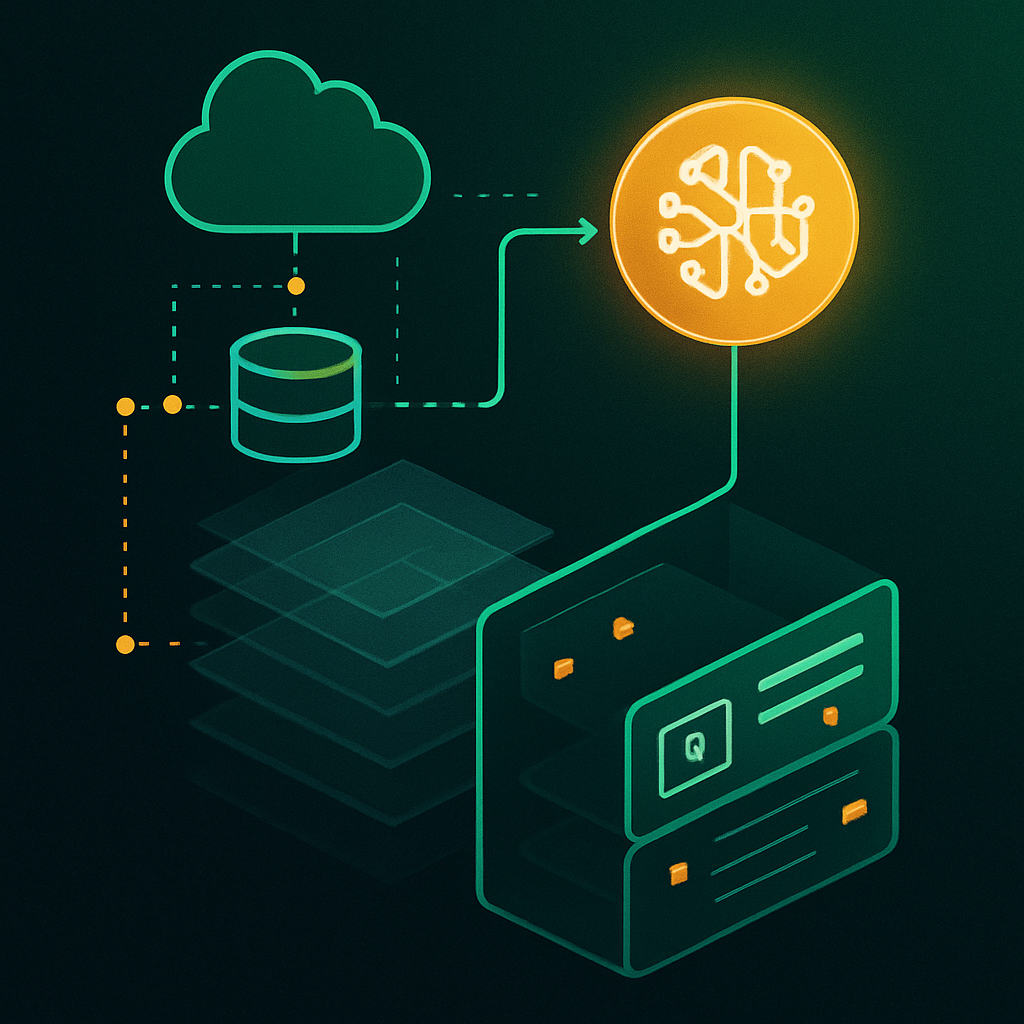
Illustrating AI Context Integration
Strategic Recommendations for Effective AI Context Integration
Organizations aiming to maximize the benefits of AI context integration should consider the following strategic recommendations:
- Invest in Data Quality: Building a robust framework for data quality management ensures the integrity and accuracy of enriched datasets. This includes deploying advanced data cleansing and transformation tools to maintain high standards of data readiness.
- Cross-Functional Collaboration: Encouraging collaboration between IT and business units is crucial for aligning AI initiatives with strategic objectives. Regular workshops and joint planning sessions can help ensure that AI models are contextualized appropriately to meet business needs.
- Leverage Cloud Technologies: Utilizing cloud solutions can facilitate scalability and flexibility in data management. Cloud platforms offer tools for seamless integration and processing of large datasets, enabling agile AI deployments across dispersed enterprise structures.
- Evaluate AI Impact Metrics: Continuously measuring the impact of AI initiatives against defined success criteria can help in optimizing processes. Key metrics might include reduction in operational costs, enhancement in customer satisfaction scores, and improvement in agility of decision-making processes.
Framework for Measuring ROI in AI Context Integration
The strategic approach to measuring ROI in AI context integration encompasses several stages, from defining scope to continuous measurement of outcomes. Each phase focuses on maximizing the benefit realization from AI context initiatives.
1. Define the Scope and Objectives
Establishing clear objectives for AI context integration is critical. These objectives should align with organizational goals such as enhancing customer satisfaction, improving operational efficiency, or increasing revenue. For each objective, define key performance indicators (KPIs) that will serve as benchmarks for success. Objectives should not only focus on financial outcomes but also consider long-term strategic gains such as innovation uplift and market positioning.
To ensure objectives are comprehensive, consider using frameworks such as the Balanced Scorecard, which evaluates performance from multiple perspectives, including financial, customer, internal processes, and learning and growth. Employ SMART criteria (Specific, Measurable, Achievable, Relevant, Time-bound) to further refine objectives, ensuring clarity and focus in tracking and measuring outcomes.
2. Baseline Current Processes
Understand and document the current state of processes and operations that the AI context initiative aims to enhance. This includes measuring existing performance levels against the identified KPIs. This baseline will serve as the foundation for comparison post-integration. Conduct a thorough gap analysis to identify inefficiencies and potential improvement areas, focusing on where AI context integration can make the most significant impact.
Engage with stakeholders through workshops or surveys to gather qualitative data on pain points and areas for potential enhancement. Leverage data analytics tools to quantify process metrics, ensuring the baseline is data-driven and precise. Such rigorous baseline setting ensures that subsequent improvements can be directly attributed to AI initiatives, providing clear evidence of impact.
3. Implement Incrementally
Adopt an iterative implementation strategy. Start small by integrating AI context into a single process or department. Use insights from these implementations to refine strategies and expand gradually. This limits risk and helps in managing resource allocation effectively.
- Pilot Projects: Launch pilot projects in areas with immediate value potential, such as customer service automation or supply chain optimization. These pilots should be well-documented with structured pathways for scaling upon success.
- Agile Methodology: Leverage agile principles to manage implementation increments, ensuring continuous feedback and adaptability. Set short-term deliverables with clear checkpoints to assess progress and adjust scope or methods as needed.
- Resource Allocation: Allocate resources dynamically based on pilot results. Initial successes, like a 20% increase in process efficiency or a 15% reduction in operational costs in pilot areas, can justify increased investment and dedicated teams for broader adoption.
- Knowledge Sharing: Facilitate regular knowledge-sharing sessions across departments to propagate learnings and best practices from pilot implementations. This helps in cultivating an AI-friendly culture and readiness for further integration.
By following an incremental approach, organizations can mitigate risks associated with large-scale deployment, effectively manage change, and build a robust foundation for expanding AI context capabilities.
Organizations implementing AI context integration must maintain a focus on iterative learning and adaptation, ensuring that each phase is well-documented and feedback loops are utilized to refine and optimize the integration process. As the integration expands, allied changes in governance and resource deployment can be synchronized, aligning the entire enterprise to the AI-driven transformation journey.
Calculating Financial Metrics for ROI
Measuring ROI requires translating qualitative improvements into quantifiable financial metrics. This involves calculating both the cost savings and revenue enhancement attributable to AI context integration.
Cost Savings
- Operational Efficiency: Reduction in time and resources needed to perform tasks as AI context enables automation and intelligent decision-making.
- Error Reduction: Decrease in error rates and the associated costs through better-informed decisions and processes.
To further quantify cost savings, enterprises can consider the following Key Performance Indicators (KPIs):
- Automation Rate: Percentage of tasks automated through AI context integration
- Process Cycle Time: Reduction in the time taken to complete tasks and processes
- Full-Time Equivalent (FTE) Savings: Reduction in the number of employees required to perform tasks
Revenue Enhancement
- Customer Engagement: AI-enhanced interactions can lead to higher conversion rates and customer retention.
- Product Innovation: New insights can lead to the development of improved or new product offerings.
Revenue enhancement can be measured through metrics such as:
- Conversion Rate: Increase in the percentage of customers who complete a desired action
- Customer Lifetime Value (CLV): Increase in the average revenue generated per customer over their lifetime
- New Product Revenue: Revenue generated from new products or services developed using insights from AI context integration
ROI Calculation Framework
To calculate the ROI of AI context integration, enterprises can use the following framework:
- Identify the key cost savings and revenue enhancement metrics relevant to the organization
- Estimate the baseline values for these metrics prior to AI context integration
- Measure the post-implementation values for these metrics
- Calculate the difference between the post-implementation and baseline values to determine the cost savings and revenue enhancement achieved
- Use the following formula to calculate the ROI: (Cost Savings + Revenue Enhancement - Implementation Costs) / Implementation Costs
By applying this framework and tracking the relevant metrics, enterprises can effectively measure the ROI of AI context integration and drive business value through informed decision-making.
Governance and Compliance Considerations
Ensuring that AI context integration respects regulatory and organizational compliance standards is crucial. This includes adherence to data privacy laws such as the GDPR and maintaining ethical standards in AI deployment. Establishing a robust governance framework helps minimize risks and ensures long-term sustainability.
Data Privacy and Security
A key aspect of governance in AI context integration is ensuring the privacy and security of sensitive data. This involves implementing measures such as data anonymization, encryption, and access controls to protect Personally Identifiable Information (PII) and prevent unauthorized access. Additionally, organizations must comply with regulations like HIPAA in the healthcare sector and GDPR in the European Union, which mandate strict data protection standards. A well-designed Identity and Access Management (IAM) system, coupled with Single Sign-On (SSO) and Mutual Transport Layer Security (mTLS), can help maintain the integrity of sensitive data.
Establishing a Compliance Framework
To ensure seamless compliance, organizations should establish a comprehensive framework that incorporates industry-recognized standards and best practices. This may include implementing a Service Organization Control 2 (SOC 2) framework, which provides a structured approach to managing and monitoring data security and privacy. Furthermore, organizations should conduct regular Data Loss Prevention (DLP) audits to identify and mitigate potential risks. By leveraging tools like Software Bill of Materials (SBOM) and Open Worldwide Application Security Project (OWASP) guidelines, organizations can strengthen their compliance posture and reduce the risk of data breaches.
AI Governance and Ethics
As AI becomes increasingly pervasive in enterprise context integration, organizations must prioritize AI governance and ethics. This involves developing clear guidelines for AI deployment, ensuring transparency and explainability in AI decision-making, and establishing accountability mechanisms for AI-related errors or biases. A well-structured Key Management Service (KMS) and Hardware Security Module (HSM) can help secure AI models and prevent unauthorized access. Moreover, organizations should establish an Enterprise Context Management (ECM) framework that incorporates Model Context Protocol (MCP) and Retrieval-Augmented Generation (RAG) principles to ensure responsible AI development and deployment.
By prioritizing governance and compliance in AI context integration, organizations can ensure the long-term sustainability and success of their AI initiatives. This involves establishing a robust governance framework, prioritizing data privacy and security, and maintaining transparency and accountability in AI decision-making. By leveraging industry-recognized standards and best practices, organizations can mitigate risks and drive business value with AI context integration.
- Conduct regular DLP audits to identify and mitigate potential risks
- Implement a SOC 2 framework to ensure data security and privacy
- Develop clear guidelines for AI deployment and establish accountability mechanisms
- Establish an ECM framework that incorporates MCP and RAG principles
- Prioritize transparency and explainability in AI decision-making
By following these strategic recommendations, organizations can ensure that their AI context integration initiatives are aligned with regulatory requirements and industry standards, ultimately driving business value and minimizing risks.
Strategies for Organizational Adoption
For successful adoption, it is essential to align AI context integration with organizational culture and business processes. This involves:
- Change Management: Developing strategies to manage resistance and promote adoption through training and effective communication.
- Leadership Buy-in: Gaining support from senior leadership to advocate for the project’s value and encourage organization-wide participation.
Building a Center of Excellence for AI Context Integration
A key strategy for organizational adoption is establishing a Center of Excellence (CoE) for AI context integration. This CoE serves as a centralized hub for best practices, standards, and expertise, facilitating collaboration and knowledge sharing across departments. By establishing a CoE, organizations can:
- Standardize AI context integration processes and tools, ensuring consistency and reducing duplication of efforts.
- Develop a community of practice, where stakeholders can share experiences, challenges, and successes, promoting a culture of innovation and continuous learning.
- Provide training and support for employees, enabling them to effectively leverage AI context integration capabilities and drive business value.
Developing a Roadmap for AI Context Integration
A well-defined roadmap is crucial for successful organizational adoption of AI context integration. This roadmap should:
- Align with the organization's overall business strategy and goals, ensuring that AI context integration initiatives support key objectives.
- Identify priority areas for AI context integration, focusing on high-impact use cases and quick-win opportunities.
- Outline a phased implementation approach, allowing for incremental progress, testing, and refinement of AI context integration capabilities.
By establishing a clear roadmap, organizations can ensure that AI context integration efforts are focused, effective, and aligned with business priorities, ultimately driving greater ROI and business value.
Metrics for Measuring Organizational Adoption
To assess the success of AI context integration adoption, organizations should establish key metrics and benchmarks, such as:
- Adoption rates: Tracking the percentage of employees using AI context integration tools and capabilities.
- User engagement: Monitoring the frequency and depth of user interaction with AI context integration features.
- Business outcomes: Measuring the impact of AI context integration on key business metrics, such as revenue growth, cost savings, or customer satisfaction.
By regularly monitoring and analyzing these metrics, organizations can refine their strategies for organizational adoption, identify areas for improvement, and optimize the benefits of AI context integration.
By implementing these strategies and metrics, organizations can drive successful adoption of AI context integration, ultimately unlocking the full potential of this technology to transform business operations and drive growth.
Conclusion: Driving Business Value with AI Context Integration
The future-oriented enterprise must view AI context integration not merely as a technical upgrade but as a strategic investment yielding measurable ROI. By applying this framework and focusing on clear objectives, governance, and continuous improvement, organizations can harness the full potential of AI to drive substantial business value.
Key Takeaways for AI Context Integration
To drive business value with AI context integration, executives should focus on the following key strategic considerations:
- Establishing a clear ROI framework that accounts for both cost savings and revenue enhancement, ensuring alignment with organizational objectives.
- Implementing a robust governance structure that addresses data privacy, security, and AI ethics, thereby minimizing risks and ensuring compliance with regulations such as GDPR and HIPAA.
- Fostering a culture of continuous learning and improvement, leveraging insights from LLM and RAG to refine AI context integration strategies over time.
Strategic Roadmap for AI Context Integration
A well-structured roadmap for AI context integration should include:
- Conducting a thorough baseline assessment of current processes and systems to identify areas for improvement and potential ROI.
- Developing a phased implementation plan that prioritizes high-impact use cases and aligns with organizational objectives, leveraging technologies such as MCP and API.
- Establishing key performance indicators (KPIs) to measure the success of AI context integration initiatives, such as metrics on data quality, process efficiency, and revenue growth.
By following this strategic roadmap and maintaining a strong focus on governance, compliance, and continuous improvement, organizations can unlock the full potential of AI context integration and drive substantial business value in today's fast-paced digital landscape.
As enterprises continue to navigate the complexities of AI context integration, it is essential to prioritize a strategic, ROI-driven approach that balances technological innovation with business acumen and regulatory compliance.