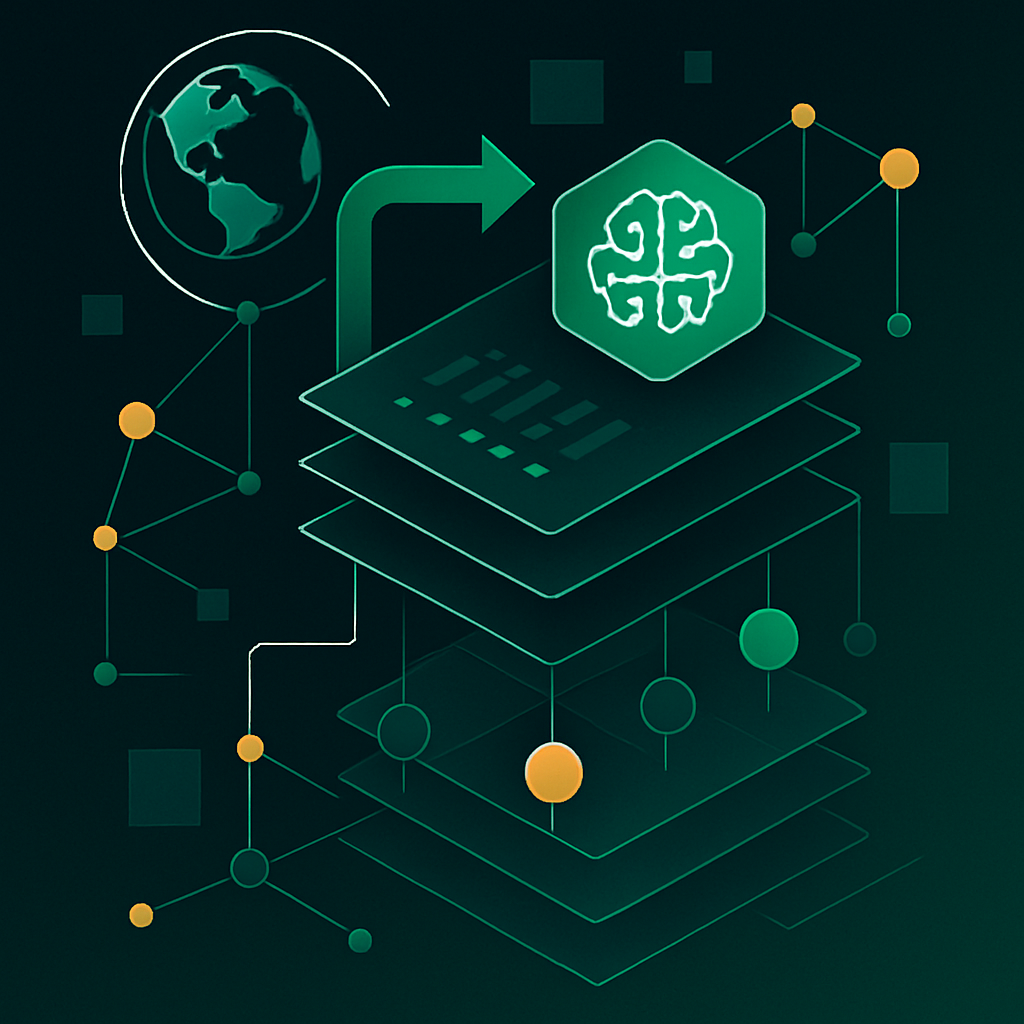

Introduction to Strategic Context Architecture
In the realm of AI adoption, the importance of designing a robust context architecture cannot be overstated, especially when addressing the distinct needs of various industries. This article delves into the strategic development of context architectures tailored to specific industries like healthcare, finance, and retail. We will explore the unique challenges and regulatory demands these industries face and provide actionable recommendations for effective AI implementation.
Understanding the nuances and requirements of industry-specific contexts is crucial for ensuring compliance, achieving operational efficiency, and maximizing return on investment (ROI) from AI systems. By adopting a strategic context architecture, organizations can better manage data, align with regulatory standards, and ensure seamless integration with existing systems.
The Role of Context Architecture in Modern Enterprises
For modern enterprises, context architecture serves as the backbone that supports the deployment and scaling of AI technologies. It enables organizations to unify disparate data sources, implement cutting-edge AI capabilities, and foster data-driven decision-making. By streamlining data flows and contextual information processing, businesses can enhance the predictive accuracy of AI systems and accelerate the delivery of actionable insights.
Building Resilience and Scalability
A well-structured context architecture is instrumental in building both resilience and scalability into AI initiatives. Enterprises leveraging such architectures are better equipped to handle data volume fluctuations and ensure consistent service delivery amidst changing business environments. For example, in the retail industry, where shopping patterns can vary significantly due to seasonal trends, a robust context architecture allows seamless scaling up or down, optimizing inventory management and enhancing customer engagement in real-time.
Key Strategic Considerations
- Data Integration: Establishing seamless data integration protocols is critical. Utilizing APIs and MCP can enable real-time data exchange, ensuring that AI systems operate with the most current and comprehensive datasets available.
- Compliance Alignment: Industry-specific regulations such as HIPAA and GDPR require rigorous data handling and privacy measures. Strategic context architecture helps automate compliance checks and adopts a proactive approach to data privacy concerns.
- Organizational Change Management: Successful AI adoption is contingent upon effective change management strategies. This involves aligning the workforce with new AI-driven processes through training and communication initiatives, ensuring that human and machine intelligence operate synergistically.
Case Study: Transforming Financial Services with AI
A leading multinational bank exemplified the transformative power of strategic context architecture by integrating AI in fraud detection and customer service. By architecting a context-aware AI system, the bank achieved a 40% reduction in fraud incidents. Real-time data analytics and predictive algorithms now enable the bank to preemptively identify potential security threats, safeguarding client assets and maintaining trust in digital transactions. Furthermore, the AI-driven customer service platform has increased customer satisfaction scores by 30%, demonstrating the tangible benefits of tailored context architecture in boosting operational efficiency and customer relations.
Defining Context Architecture
Context architecture refers to the structured approach of utilizing contextual data within AI systems to enhance decision-making and personalization. It involves a cohesive strategy that integrates data governance, context management, and industry-specific regulations to form a robust framework for AI operations. This architecture is foundational to leveraging the full potential of context-aware applications.
Core Components of Context Architecture
- Data Governance: Establishing policies and procedures to manage data accessibility, integrity, and security.
- Context Management: Utilizing MCPs to support dynamic and scalable context retrieval and application.
- Regulatory Compliance: Ensuring adherence to industry standards such as GDPR, HIPAA, and SOC 2 to safeguard PII and sensitive information.
Data Governance Strategies
Effective data governance provides the backbone for context architecture by ensuring that data is accurate, consistent, and secure. Organizations should implement a data stewardship model where clearly defined roles and responsibilities are assigned to ensure ongoing data quality and compliance. For example, appointing a Chief Data Officer (CDO) can centralize accountability for data policies and oversight.
Advanced analytics frameworks such as the Data Management Body of Knowledge (DMBOK) can serve as a reference for developing comprehensive data governance plans. Regular audits, combined with automated tools for data monitoring, help maintain the integrity of the data lifecycles, thereby facilitating trust and reliability in AI decision-making processes.
Dynamic Context Management with MCP
Context management utilizes MCP as a key enabler for creating intelligent systems that adapt in real-time to varying inputs and environments. The adoption of MCP allows for seamless integration of multi-source data, facilitating real-time context extraction and personalization.
An example of successful MCP implementation can be seen in customer support AI platforms, where MCP dynamically updates its strategies based on live customer interaction data to provide personalized recommendations. A strategic recommendation here includes leveraging RAG to enhance data retrieval capabilities, thereby improving the system's ability to adapt quickly to contextual changes and user needs.
Ensuring Regulatory Compliance
With evolving regulations like GDPR and HIPAA, maintaining compliance is crucial in protecting sensitive information and upholding consumer trust. AI systems embedded within context architectures must have built-in compliance measures. Incorporating automatic DLP measures ensures that all PII is appropriately handled, limiting exposure to risks.
Organizations can operationalize compliance by adopting frameworks such as the NIST Privacy Framework or aligning with industry-specific control sets. Compliance officers should work closely with IT teams to ensure that data collected, stored, and processed adheres to normative legal requirements, minimizing vulnerabilities and breaches.
A comprehensive context architecture ensures that organizations not only meet current strategic objectives but are well-prepared to adapt to future challenges. By integrating robust data governance, dynamic context management, and stringent regulatory frameworks, enterprises can unlock the true potential of AI-driven systems, ensuring both operational excellence and strategic agility.
Industry-Specific Challenges and Solutions
Healthcare: Navigating Compliance and Patient Privacy
The healthcare industry faces stringent regulatory demands, primarily around patient data privacy and security. Compliance with HIPAA is paramount when developing AI solutions. A strategic context architecture in healthcare requires robust data governance frameworks and integration with electronic health records (EHR) systems.
The global healthcare AI market is projected to reach $45.2 billion by 2026, underscoring the critical need for strategic architecture in context-aware applications.
- Challenge: Ensuring data interoperability and maintaining patient privacy across various platforms.
- Solution: Implementing IAM frameworks and secure API integrations to control access and manage user permissions.
Finance: Security and Real-Time Data Flow
In finance, the real-time analysis of transactional data is crucial for making informed decisions. The strict regulatory frameworks such as the GDPR require context architectures to prioritize data protection and consent management. AI adoption in finance also hinges on robust security protocols to guard against breaches and fraud.
- Challenge: High-frequency trading environments needing real-time context application without compromising security.
- Solution: Leveraging mTLS and HSMs for secure data transfer and storage.
Retail: Enhancing Personalization with AI
Retailers are leveraging AI to personalize customer experiences and optimize supply chain operations. Context architecture in retail focuses on analyzing consumer behavior and providing real-time recommendations, all while being mindful of data privacy.
- Challenge: Balancing personalization with customer privacy concerns.
- Solution: Adopting DLP solutions to anonymize customer data and prevent unauthorized access.
Strategic Frameworks for Context Architecture
Utilizing MCP for Scalability
To achieve scalability and flexibility, employing MCP is critical. This approach enables dynamic context switching and management in varied industry environments, thereby enhancing the adaptability of AI systems.
For instance, in the healthcare sector, MCP can be leveraged to develop AI models that can seamlessly switch between different patient data contexts, ensuring compliance with HIPAA regulations while providing personalized care recommendations. Similarly, in the finance industry, MCP can facilitate the creation of scalable AI systems that can adapt to changing market conditions and regulatory requirements, such as GDPR and SOC 2.
A key benefit of utilizing MCP is its ability to integrate with existing API architectures, enabling organizations to leverage their existing technology stack while enhancing their AI capabilities. Additionally, MCP's compatibility with gRPC and HTTP protocols ensures seamless communication between different system components, further facilitating scalability and flexibility.
Benchmarking and Metrics
For an effective context architecture, establishing key performance indicators (KPIs) and benchmarking against industry standards is essential. Metrics might include response times, data processing accuracy, and compliance adherence rates.
Some common metrics used to evaluate the effectiveness of context architecture include:
- Context Switching Time (CST): The time it takes for the AI system to switch between different contexts.
- Context Accuracy Rate (CAR): The percentage of accurate context switching instances.
- Compliance Adherence Rate (CAR): The percentage of compliant data processing instances.
Organizations can use these metrics to benchmark their context architecture against industry standards and identify areas for improvement. For example, a healthcare organization may aim to achieve a CST of less than 500ms and a CAR of 95% or higher.
Organizational Adoption and Change Management
Successful implementation of context architecture demands a thorough change management strategy. Training programs and cross-departmental collaborations are pivotal to foster understanding and adoption across the organization.
A well-structured change management plan should include:
- Stakeholder Analysis: Identify key stakeholders and their roles in the context architecture implementation process.
- Training and Development: Provide comprehensive training programs for stakeholders to ensure they understand the context architecture and its benefits.
- Communication Plan: Establish a clear communication plan to keep stakeholders informed about the implementation progress and any changes to the context architecture.
By following these steps, organizations can ensure a smooth transition to a new context architecture and maximize the benefits of their AI investments. Additionally, establishing a Center of Excellence (CoE) for context architecture can help drive adoption and governance across the organization, ensuring that the context architecture is aligned with business objectives and industry regulations.
A well-planned change management strategy is essential to ensure the successful adoption of context architecture. By engaging stakeholders, providing training, and communicating effectively, organizations can minimize disruption and maximize the benefits of their AI investments.
Conclusion
Implementing a strategic context architecture not only addresses industry-specific challenges but also amplifies the value derived from AI technologies. Organizations stand to benefit from improved compliance, enhanced personalization, and agile operations, ultimately leading to a significant competitive advantage in their respective industries.
Measuring Success and ROI
To gauge the effectiveness of a strategic context architecture, organizations should establish clear benchmarks and metrics. This includes tracking key performance indicators (KPIs) such as data quality, model accuracy, and the overall return on investment (ROI) of AI initiatives. By leveraging frameworks like LLM and RAG, businesses can quantify the impact of their context architecture on industry-specific challenges, such as GDPR compliance in finance or HIPAA compliance in healthcare.
- Develop a comprehensive dashboard to monitor KPIs and facilitate data-driven decision-making
- Conduct regular audits to ensure adherence to industry regulations and standards, such as SOC 2 and OWASP
- Establish a culture of continuous learning and improvement, incorporating feedback from stakeholders and lessons learned from SBOM and DLP initiatives
Future-Proofing Your Context Architecture
As AI technologies continue to evolve, it is essential for organizations to future-proof their context architecture. This involves staying abreast of emerging trends, such as the integration of gRPC and HTTP protocols, and the adoption of TLS and mTLS for enhanced security. By prioritizing scalability, flexibility, and security, businesses can ensure their context architecture remains adaptable to changing industry requirements and technological advancements.
A strategic context architecture is not a one-time implementation, but rather a continuous process of refinement and evolution. By embracing this mindset, organizations can unlock the full potential of AI and maintain a competitive edge in their respective industries.
Best Practices for Organizational Adoption
Successful implementation of a strategic context architecture requires more than just technical expertise – it demands a deep understanding of organizational dynamics and change management. To facilitate seamless adoption, businesses should:
- Establish clear communication channels and stakeholder buy-in
- Foster a culture of collaboration and knowledge-sharing across departments
- Develop targeted training programs to address skill gaps and ensure workforce readiness
- Emphasize the importance of Identity and Access Management (IAM) and Single Sign-On (SSO) in maintaining security and compliance
By embracing a strategic context architecture and prioritizing organizational adoption, businesses can unlock the full potential of AI and achieve a lasting competitive advantage in their respective industries. As the landscape of AI continues to evolve, one thing is certain – a well-designed context architecture will remain the foundation for success.