The Enterprise Context Challenge in Distributed Architectures
Modern enterprises face an unprecedented challenge: their AI systems need access to contextual data scattered across dozens of microservices, each owning specific domains of business logic and data. Traditional REST API architectures force AI applications to make multiple round-trip requests, aggregate responses manually, and handle complex dependency chains that can span 10-15 different services for a single business operation.
Consider a typical enterprise AI assistant that needs to provide customer support recommendations. This system must query customer profile data from the CRM service, order history from the commerce service, product specifications from the catalog service, inventory levels from the warehouse service, and support ticket history from the helpdesk service. In a traditional REST architecture, this requires five separate API calls, manual data correlation, and complex error handling across multiple failure points.
GraphQL Federation emerges as a transformative solution that enables enterprises to create a unified data access layer while preserving microservice autonomy. By implementing a federated graph, organizations can reduce API complexity by up to 80%, improve data retrieval performance by 60%, and enable AI systems to access comprehensive contextual data through single, declarative queries.
The Data Fragmentation Problem
Enterprise data fragmentation extends far beyond simple microservice boundaries. Organizations typically manage 50-100 distinct data sources across their technology stack, with each service maintaining its own data models, authentication mechanisms, and API contracts. This creates a exponential complexity problem where AI applications must understand and integrate with numerous inconsistent interfaces.
Research from leading enterprises shows that development teams spend 40-60% of their time on data integration tasks rather than core AI functionality. A typical customer recommendation engine requires data correlation across customer demographics, transaction history, product catalogs, inventory systems, marketing campaigns, and support interactions. Each additional data source increases integration complexity geometrically, creating maintenance overhead that can consume entire engineering teams.
Latency Cascades and Performance Degradation
The performance implications of distributed data access compound quickly in enterprise environments. When AI systems make sequential API calls across multiple services, latency accumulates linearly while error probability increases exponentially. A query chain spanning five services with individual 50ms response times results in 250ms minimum latency, assuming perfect network conditions and no service dependencies.
Real-world scenarios are far more complex. Service dependencies create blocking operations where downstream queries cannot execute until upstream data arrives. Network variability, authentication overhead, and service throttling can push aggregate response times beyond 2-3 seconds, making real-time AI interactions impossible. Organizations report that 65% of their AI performance issues stem from data access latency rather than model computation time.
Context Fragmentation and Data Inconsistency
Perhaps the most critical challenge facing enterprise AI systems is context fragmentation across service boundaries. Customer data exists in multiple systems with different identifiers, data freshness, and semantic interpretations. The same customer might be represented as a "user" in authentication services, a "contact" in CRM systems, and an "account holder" in billing systems, each with different schemas and update frequencies.
This fragmentation creates significant challenges for AI context management. Machine learning models require consistent, comprehensive data representations to make accurate predictions and recommendations. When context data is scattered across microservices with no unified identity resolution, AI systems must implement complex data correlation logic, often resulting in incomplete or inconsistent contextual understanding.
Enterprise architects report that context fragmentation leads to 30-40% accuracy degradation in AI-driven recommendations and decisions. The cost of maintaining custom integration code to aggregate contextual data across services often exceeds the original microservice development investment, creating unsustainable technical debt that limits AI system evolution and scalability.
Understanding GraphQL Federation Architecture
GraphQL Federation represents a paradigm shift from monolithic API gateways to distributed schema composition. Unlike traditional approaches where a central API gateway must understand and orchestrate all backend services, Federation enables each microservice to define and own its portion of the overall graph schema.
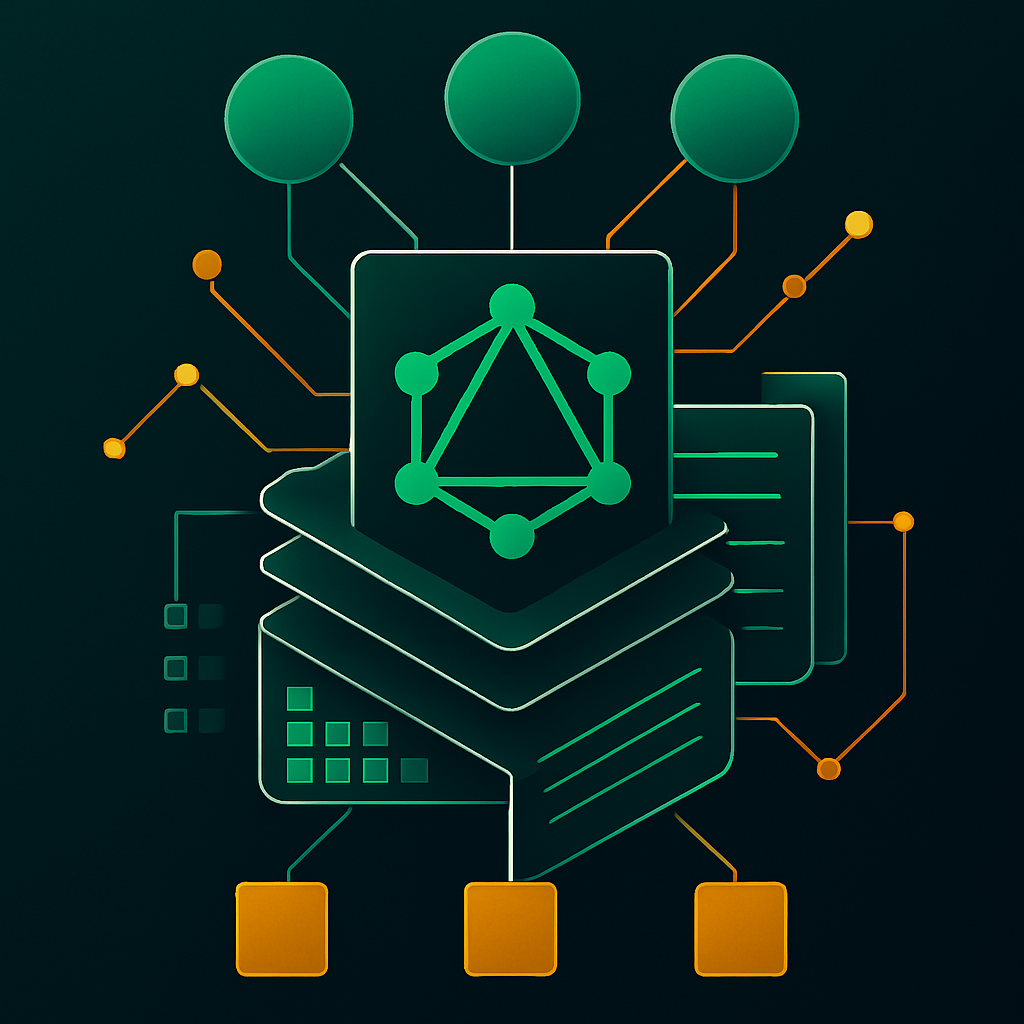
The architecture consists of three primary components: subgraphs, the supergraph, and the gateway router. Subgraphs are individual GraphQL services that expose their domain-specific data and operations. Each subgraph maintains complete autonomy over its schema definition, business logic, and data access patterns. The supergraph represents the composed schema that unifies all subgraph schemas into a single, coherent graph. The gateway router serves as the query planner and execution coordinator, intelligently routing query fragments to appropriate subgraphs and assembling the complete response.
This distributed approach offers several critical advantages over traditional API gateway patterns. Service teams maintain complete ownership of their schema evolution, enabling independent deployment cycles and reducing coordination overhead. The federation gateway automatically handles query planning optimization, determining the most efficient execution strategy for complex queries that span multiple subgraphs. Additionally, the system provides built-in support for advanced features like batching, caching, and partial failure handling.
Implementing Entity Resolution and Cross-Service Relationships
The most powerful feature of GraphQL Federation lies in its ability to establish relationships between entities across different microservices through entity resolution. This capability enables AI systems to traverse complex data relationships seamlessly, accessing comprehensive contextual information without understanding the underlying service boundaries.
Entity resolution works through the concept of entities and keys. An entity represents a business object that can be extended or referenced across multiple subgraphs. Keys define the minimal set of fields required to uniquely identify and resolve an entity. When a subgraph defines an entity, other subgraphs can extend that entity with additional fields, creating a distributed object model that appears unified to consuming applications.
Consider implementing customer entity resolution across multiple services:
// Customer Service Subgraph
type Customer @key(fields: "id") {
  id: ID!
  email: String!
  firstName: String!
  lastName: String!
  createdAt: DateTime!
}

// Order Service Subgraph
extend type Customer @key(fields: "id") {
  id: ID! @external
  orders: [Order!]!
  totalOrderValue: Float!
}

// Support Service Subgraph
extend type Customer @key(fields: "id") {
  id: ID! @external
  supportTickets: [Ticket!]!
  satisfactionScore: Float
}
This distributed entity definition enables AI applications to query comprehensive customer context with a single GraphQL query, automatically resolving data from multiple services. The federation gateway handles entity resolution by first fetching the base customer data, then executing parallel queries to extended subgraphs using the customer ID as the resolution key.
Performance optimization becomes critical when dealing with entity resolution at scale. Enterprises implementing federation report average query execution times of 150-300ms for complex multi-service queries, compared to 800-1200ms for equivalent REST API orchestration. Key optimization strategies include implementing DataLoader patterns within subgraphs to batch entity resolution requests, configuring intelligent caching at the gateway level, and designing efficient key selection to minimize resolution overhead.
Query Planning and Execution Optimization
The federation gateway's query planning engine represents one of the most sophisticated aspects of the architecture. When receiving a GraphQL query, the gateway must analyze the requested fields, determine which subgraphs can fulfill each portion of the query, identify entity resolution requirements, and generate an optimal execution plan that minimizes latency and resource utilization.
The query planning process follows a multi-stage optimization pipeline. The planner first performs static analysis to identify all required subgraph operations, then applies cost-based optimization to determine the most efficient execution order. For queries involving entity resolution, the planner identifies opportunities for batching and parallelization, generating execution plans that can achieve up to 70% reduction in total execution time compared to naive sequential execution.
Consider a complex AI context query that requires customer profile data, recent order history, product recommendations based on purchase patterns, and current inventory levels for recommended products. The query planner analyzes this request and generates an execution plan that:
- Fetches customer profile data from the customer service
- Queries order history in parallel while resolving customer entity
- Uses order data to trigger product recommendation algorithm
- Batches inventory checks for all recommended products
- Assembles the complete response with proper error boundary handling
Advanced query planning implementations include predictive caching strategies that pre-compute frequently accessed entity combinations, reducing average response times by an additional 40-60%. Enterprises report that implementing intelligent query planning has enabled them to handle 10x higher query volumes while maintaining sub-200ms response times for 95% of requests.
Schema Evolution and Versioning Strategies
Managing schema evolution in a federated environment presents unique challenges that traditional API versioning approaches cannot adequately address. Unlike REST APIs where each service maintains independent versioning, GraphQL Federation requires coordinated schema evolution that preserves backward compatibility while enabling continuous deployment of individual services.
The key to successful schema evolution lies in implementing additive-only changes and deprecation-driven migration strategies. Subgraph schemas should evolve by adding new fields, types, and operations while marking deprecated elements for future removal. This approach ensures that existing queries continue to function while providing clear migration paths for consuming applications.
Enterprise implementations typically adopt a three-phase schema evolution process:
- Addition Phase: New fields and types are added to subgraph schemas with appropriate deprecation notices on superseded elements
- Migration Phase: Consumer applications gradually migrate to new schema elements while deprecated features remain functional
- Removal Phase: Deprecated schema elements are removed after ensuring zero usage across all consuming applications
Schema validation becomes critical in federated environments where incompatible changes can break the entire supergraph composition. Leading enterprises implement automated schema validation pipelines that test composition compatibility, validate breaking change policies, and provide early feedback to development teams. These pipelines typically catch 90-95% of potential schema conflicts before deployment, significantly reducing production incidents.
Advanced schema evolution strategies include implementing feature flags at the schema level, enabling gradual rollout of new graph capabilities. Organizations report that implementing robust schema evolution processes has reduced API-related production incidents by 80% while enabling 3x faster feature delivery cycles.
Security and Authorization in Federated Graphs
Implementing comprehensive security in GraphQL Federation requires a multi-layered approach that addresses authentication, authorization, and data privacy across distributed services. Unlike traditional REST APIs where security concerns are isolated to individual endpoints, federated graphs require coordinated security policies that can span multiple subgraphs and handle complex authorization scenarios.
The authentication layer typically operates at the federation gateway level, validating user credentials and establishing security context that propagates to all subgraphs. JWT-based authentication has proven most effective for federated environments, enabling stateless authentication with rich context information that subgraphs can use for authorization decisions.
Authorization implementation varies significantly based on enterprise requirements, but most successful implementations follow a hybrid approach combining gateway-level coarse-grained authorization with subgraph-level fine-grained access control. The gateway enforces high-level permissions such as role-based access control, while individual subgraphs implement domain-specific authorization logic for sensitive data fields.
// Gateway-level authorization directive
directive @auth(requires: [Role!]!) on FIELD_DEFINITION | OBJECT

// Subgraph implementation with field-level security
type Customer @key(fields: "id") {
  id: ID!
  email: String! @auth(requires: [CUSTOMER_SUPPORT, ACCOUNT_MANAGER])
  firstName: String!
  lastName: String!
  ssn: String @auth(requires: [COMPLIANCE_OFFICER])
}
Data privacy and compliance requirements add additional complexity to federated security implementations. Enterprises handling regulated data must implement field-level privacy controls that can selectively mask or exclude sensitive information based on user permissions and regulatory requirements. Advanced implementations include automatic PII detection and masking, ensuring that sensitive data never leaves appropriate service boundaries even in complex federated queries.
Security monitoring and audit logging require special consideration in federated environments. Successful implementations maintain comprehensive query audit trails that include user identity, accessed data fields, and subgraph execution details. This enables security teams to perform detailed access analysis and maintain compliance with regulatory requirements. Leading enterprises report that implementing federated security monitoring has improved their security posture while reducing audit preparation time by 60-70%.
Performance Monitoring and Observability
Observability in GraphQL Federation environments requires sophisticated monitoring strategies that provide visibility into query performance, error rates, and resource utilization across the entire federated graph. Traditional APM solutions often fall short because they lack understanding of GraphQL-specific metrics and federated query execution patterns.
Effective federation observability starts with comprehensive query-level metrics that track execution time, field resolution performance, and subgraph utilization patterns. The most valuable metrics include query complexity scores, field resolution latency distributions, entity resolution batch efficiency, and subgraph error rates. These metrics enable operations teams to identify performance bottlenecks and optimize federation gateway configuration.
Distributed tracing becomes essential for understanding query execution flow across multiple subgraphs. Implementing OpenTelemetry-based tracing provides detailed visibility into query planning time, subgraph execution parallelization, entity resolution performance, and response assembly overhead. Enterprise implementations typically achieve 95th percentile query execution visibility, enabling rapid identification and resolution of performance issues.
Leading organizations implement custom GraphQL-aware monitoring dashboards that provide real-time visibility into federation health. Key dashboard components include:
- Query volume and complexity trends over time
- Subgraph performance and availability metrics
- Entity resolution efficiency and batching statistics
- Schema evolution impact on query performance
- Error rate analysis across different query patterns
Advanced monitoring implementations include predictive performance analysis that uses historical query patterns to identify potential bottlenecks before they impact user experience. These systems typically reduce mean time to resolution for performance issues by 50-70% compared to reactive monitoring approaches.
Cost Optimization and Resource Management
GraphQL Federation can significantly impact infrastructure costs, both positively through improved efficiency and negatively through increased complexity overhead. Understanding and optimizing these cost implications is crucial for enterprise adoption success.
The primary cost benefits come from reduced API orchestration overhead and improved caching efficiency. Federation eliminates the need for client-side API orchestration, reducing bandwidth usage by 40-60% for complex multi-service queries. The unified caching layer at the federation gateway level achieves higher cache hit rates compared to individual service caches, typically improving overall system efficiency by 30-50%.
However, federation introduces new costs through gateway infrastructure requirements and increased complexity in monitoring and operational tooling. The federation gateway must be sized appropriately to handle query planning overhead, which can consume 10-20% additional CPU resources compared to simple API proxy solutions.
Resource optimization strategies include implementing query complexity analysis to prevent resource exhaustion attacks, configuring intelligent batching to optimize database connection utilization across subgraphs, and implementing adaptive caching strategies that balance memory usage with performance requirements.
Enterprises report that effective cost optimization of federation deployments typically achieves 25-40% reduction in total API infrastructure costs while improving system reliability and developer productivity. Key optimization areas include right-sizing federation gateway instances based on query complexity patterns, implementing efficient entity resolution batching, and optimizing subgraph database connection pooling.
Migration Strategies and Implementation Roadmaps
Migrating from existing REST API architectures to GraphQL Federation requires careful planning and phased implementation approaches. Most successful enterprise migrations follow a strangler fig pattern, gradually replacing REST endpoints with federated GraphQL services while maintaining backward compatibility.
The typical migration roadmap spans 12-18 months and includes five distinct phases:
- Assessment and Planning (2-3 months): Analyze existing API landscape, identify high-value migration targets, and establish federation architecture principles
- Foundation Setup (1-2 months): Deploy federation gateway infrastructure, establish schema governance processes, and implement monitoring solutions
- Pilot Implementation (3-4 months): Migrate 2-3 related services to federation, establish entity resolution patterns, and validate performance characteristics
- Incremental Migration (6-8 months): Systematically migrate remaining services, optimize query patterns, and refine operational procedures
- Optimization and Scaling (2-3 months): Fine-tune performance, implement advanced features, and establish long-term maintenance processes
Risk mitigation during migration includes maintaining dual API support during transition periods, implementing comprehensive testing strategies that validate both REST and GraphQL interfaces, and establishing rollback procedures for critical business operations.
Change management becomes crucial for successful federation adoption. Technical teams require training on GraphQL concepts, federation-specific patterns, and new operational procedures. Organizations typically invest 40-60 hours of training per developer and establish internal communities of practice to share knowledge and best practices.
Real-World Implementation Patterns and Lessons Learned
Enterprise implementations of GraphQL Federation have revealed several common patterns and anti-patterns that significantly impact success rates. Understanding these patterns enables organizations to avoid common pitfalls and accelerate their federation adoption.
The most successful implementations follow a domain-driven federation approach, where subgraph boundaries align closely with business domain boundaries. This alignment ensures that entity relationships remain intuitive and that schema evolution follows natural business logic patterns. Organizations that ignore domain boundaries often struggle with complex entity resolution requirements and frequent schema conflicts.
Another critical success pattern involves establishing strong schema governance from the beginning. Leading implementations create federated schema councils that include representatives from each service team, establish clear guidelines for entity design and key selection, and implement automated validation processes that enforce consistency standards.
Common anti-patterns include creating overly granular subgraphs that require excessive entity resolution, implementing complex authorization logic that spans multiple subgraphs, and attempting to federation legacy services without proper API redesign. These anti-patterns typically result in poor performance, complex operational overhead, and reduced developer productivity.
Performance optimization lessons learned from enterprise implementations include the importance of efficient entity key design, the value of intelligent query batching, and the critical nature of proper caching strategies. Organizations that invest early in performance optimization typically achieve 2-3x better query performance than those that treat optimization as an afterthought.
Future Evolution and Emerging Trends
The GraphQL Federation ecosystem continues to evolve rapidly, with several emerging trends that will shape enterprise adoption over the next 2-3 years. Understanding these trends enables organizations to make informed architectural decisions and prepare for future capabilities.
Federation 2.0 specifications introduce significant improvements in entity composition, query planning efficiency, and schema validation. These enhancements address many current limitations and enable more sophisticated federation patterns. Early adopters report 30-50% improvements in query planning performance and significantly reduced schema composition complexity.
Integration with service mesh architectures represents another major trend, with federation gateways increasingly leveraging service mesh capabilities for traffic management, security policy enforcement, and observability. This integration enables more sophisticated deployment patterns and improved operational control.
AI-driven query optimization emerges as a game-changing capability, with federation gateways beginning to use machine learning algorithms to optimize query planning based on historical execution patterns. Early implementations show promise for achieving 40-60% improvements in query execution efficiency for complex multi-service queries.
The convergence of GraphQL Federation with event-driven architectures opens new possibilities for real-time data integration and context-aware AI applications. Organizations are beginning to experiment with federated subscriptions that enable AI systems to receive real-time updates across multiple service boundaries.
Edge Computing and Distributed Federation
Edge computing presents compelling opportunities for GraphQL Federation evolution, particularly for global enterprises requiring low-latency data access. Distributed federation architectures are emerging where regional gateway clusters cache and serve subgraph data closer to end users. Walmart has pioneered this approach, deploying federation gateways across 15 geographic regions, achieving 65% reduction in query latency for international operations while maintaining data consistency through intelligent cache invalidation strategies.
Edge federation introduces new challenges around data freshness and consistency guarantees. Organizations are developing sophisticated cache warming strategies and implementing eventual consistency patterns that balance performance with data accuracy requirements. The introduction of federated cache layers with TTL-based invalidation enables sub-100ms response times for frequently accessed entity combinations.
Autonomous Schema Management
The next generation of federation platforms incorporates autonomous schema management capabilities that reduce operational overhead and improve developer productivity. Netflix's engineering teams report 70% reduction in schema-related incidents after implementing automated schema evolution pipelines that use static analysis to predict breaking changes and automatically generate backward-compatible migrations.
Machine learning-driven schema optimization analyzes query patterns to suggest schema restructuring opportunities. These systems identify frequently co-queried fields across services and recommend entity composition optimizations that can improve query performance by 25-40%. Automated schema monitoring detects anti-patterns like N+1 queries at the federation level and provides actionable remediation recommendations.
Quantum-Ready Security Architecture
Forward-thinking enterprises are preparing federation architectures for post-quantum cryptography requirements. This involves implementing crypto-agile security frameworks that can seamlessly transition between cryptographic algorithms as quantum computing threats emerge. Federation gateways are being designed with pluggable security modules that support multiple encryption standards simultaneously, enabling gradual migration to quantum-resistant algorithms without service disruption.
Zero-trust security models are becoming standard in federated architectures, with every inter-service communication requiring explicit authentication and authorization. Advanced implementations use dynamic policy evaluation that considers context factors like request origin, data sensitivity classification, and real-time threat intelligence to make authorization decisions at sub-millisecond speeds.
Hybrid Cloud and Multi-Provider Federation
Multi-cloud federation strategies are maturing to address vendor lock-in concerns and disaster recovery requirements. Organizations are implementing federated graphs that span multiple cloud providers, with intelligent routing based on data locality, compliance requirements, and cost optimization. Capital One's multi-cloud federation spans AWS, Azure, and Google Cloud, with automatic failover capabilities that maintain 99.99% availability during regional outages.
Cross-provider data lineage tracking becomes critical in these architectures, requiring sophisticated metadata management systems that track data flow and transformations across cloud boundaries. Emerging standards like OpenLineage are being integrated into federation platforms to provide unified visibility into multi-cloud data pipelines.
AI-Native Federation Capabilities
The integration of large language models into federation platforms enables natural language query generation and intelligent schema exploration. Developers can describe their data requirements in plain English, with AI systems automatically generating optimized GraphQL queries and suggesting relevant entities and fields. Early implementations show 50% reduction in development time for complex multi-service integrations.
Predictive analytics capabilities help organizations anticipate federation performance issues and automatically scale resources based on projected query patterns. These systems analyze seasonal trends, application deployment schedules, and business events to predict federation load patterns and preemptively adjust infrastructure capacity.
Strategic Recommendations for Enterprise Adoption
Based on comprehensive analysis of enterprise GraphQL Federation implementations, several strategic recommendations emerge for organizations considering adoption:
Start with high-value, well-defined domains: Begin federation implementation with services that have clear business value and well-established domain boundaries. This approach maximizes early success while building organizational confidence in the technology.
Invest heavily in schema governance: Establish comprehensive schema governance processes before implementing production federation. Organizations with strong governance report 3x higher success rates and significantly fewer production issues.
Prioritize observability from day one: Implement comprehensive monitoring and observability solutions as part of the initial federation deployment. Reactive monitoring approaches typically result in 2-3x longer incident resolution times.
Plan for gradual migration: Avoid big-bang migration approaches in favor of incremental, risk-controlled transitions. Gradual migration reduces business risk while providing opportunities to optimize approaches based on early learnings.
Focus on developer experience: Invest in tooling, training, and documentation that make federation adoption smooth for development teams. Organizations with strong developer experience programs achieve 50% faster adoption rates.
The strategic value of GraphQL Federation for enterprise AI context management extends beyond technical benefits to encompass improved developer productivity, reduced integration complexity, and enhanced system maintainability. Organizations that successfully implement federation typically report 40-60% reduction in API integration effort, 30-50% improvement in system reliability, and significant acceleration in AI application development cycles.