Introduction
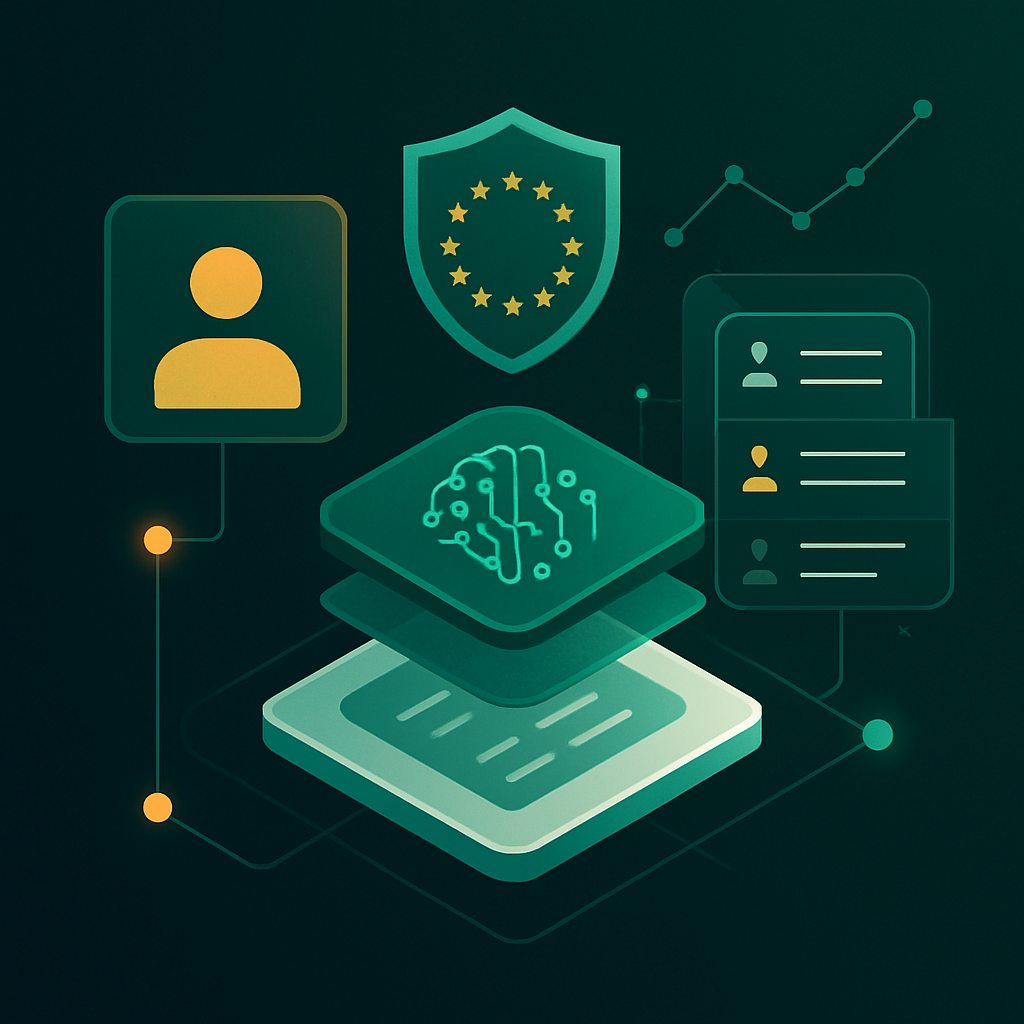
In the ever-evolving landscape of enterprise AI technology, leveraging Retrieval-Augmented Generation (RAG) and Model Context Protocol (MCP) within Enterprise Context Management (ECM) frameworks is pivotal for achieving superior compliance and operational efficiency. This intersection of technologies offers a pathway to optimize information retrieval and dynamically adapt AI-driven workflows while maintaining robust compliance standards.
Convergence of AI and Compliance
As enterprises scale their AI capabilities, the necessity for seamless integration of RAG and MCP with ECM frameworks becomes crucial. Today's enterprises are inundated with vast quantities of data, often siloed across various departments, making efficient data processing and retrieval a challenge. RAG, by enhancing the capabilities of AI systems to pull in real-time data, mitigates the latency in accessing pertinent information, thereby improving decision-making processes.
Moreover, MCP serves as an orchestrator for contextual adaptability, enabling AI systems to adjust to dynamic data environments with minimal human intervention. This adaptability ensures that the AI's responses and actions remain relevant, legally compliant, and aligned with evolving business objectives.
Strategic Implications for Enterprises
The strategic integration of RAG and MCP into ECM isn't just about technological advancement; it represents a shift towards more agile and responsive governance models. Enterprises can harness these technologies to refine their compliance strategies, notably within the frameworks required by regulatory compliance standards such as the GDPR and HIPAA.
By embedding RAG and MCP within ECM, organizations can automate compliance checks and document auditing, significantly reducing the risk of human error. For instance, in industries plagued by regulatory scrutiny such as healthcare and finance, maintaining continuous compliance through automated processes could mean the difference between costly penalties and seamless operations.
The Role of Continuous Innovation
In addition to compliance, this integration fosters an environment of continuous innovation. ECM platforms serve as fertile grounds for nurturing AI-driven innovations by facilitating experimentation with new RAG models and MCP strategies. This ensures that enterprise operations are not only compliant but also competitive, leveraging cutting-edge AI advancements to maintain market leadership.
Gartner predicts that by 2025, over 70% of enterprises will have integrated some form of AI or machine learning-driven compliance solutions within their operations. This underscores the transformative potential that integrating RAG and MCP with ECM can have, not only in meeting compliance requirements but also in driving operational efficiencies and unlocking new value streams.
Strategic Recommendations
- Engage Cross-Functional Teams: Ensure that technology integrations are aligned with compliance and business objectives by involving stakeholders from IT, legal, compliance, and operations from the outset.
- Prioritize Data Privacy: With data privacy becoming increasingly critical, organizations should prioritize the use of encryption and anonymization techniques within RAG and ECM integrations to enhance security layers.
- Invest in Training: Equip your teams with the necessary skills to manage and innovate within these integrated systems. Regular training sessions can help maintain a robust compliance posture while embracing new technological capabilities.
Understanding RAG and MCP
RAG is a transformative approach that enhances AI-generated content by incorporating real-time, contextual data retrieval. This methodology enriches the output of Large Language Models (LLMs) by grounding their responses within specific, dynamic data sources.
MCP, meanwhile, seeks to standardize context management across AI systems, ensuring that models operate with consistent, up-to-date states of environment awareness. Together, these technologies enhance the precision and relevance of AI outputs in an enterprise setting.
Architectural Pillars of RAG‑Enabled AI
At a strategic level, RAG rests on three interlocking pillars:
- Retriever Layer: A federated search engine that pulls relevant records from structured (e.g., relational databases, data warehouses) and unstructured (e.g., document repositories, email archives) stores. Enterprises typically leverage ETL pipelines or ELT streams to keep the index fresh, with latency targets of <5 seconds for high‑velocity use cases such as fraud detection.
- Ranker/Scorer: A lightweight LLM or embedding model that ranks retrieved chunks by relevance to the user query. Benchmarks from leading vendors show a 20‑30 % lift in answer relevance (measured by nDCG@10) when a ranker is employed versus raw keyword search.
- Generator: The final LLM that synthesizes the ranked context into a coherent response. Organizations that enforce a “ground‑truth verification” step—where the generator cross‑checks claims against a trusted knowledge base— report a 40 % reduction in hallucinations.
Core Tenets of the Model Context Protocol (MCP)
MCP formalizes how context is created, propagated, and retired across AI workloads. Its governance framework comprises:
- Context Schema Definition: A contract (often expressed in
JSON Schema) that enumerates mandatory fields such assource_id,retrieval_timestamp, anddata_sensitivity. Aligning the schema with GDPR and HIPAA tags enables automated compliance checks. - Versioned Context Store: Immutable snapshots stored in a secure VPC backed by a KMS‑encrypted HSM. This ensures auditability for regulator‑mandated data lineage.
- Context Expiration Policies: Time‑to‑live (TTL) rules driven by data retention schedules (e.g., 30 days for PII, 90 days for non‑PII). Expiration triggers fire CDC events that purge stale context without impacting active sessions.
Strategic Metrics to Quantify RAG + MCP Value
Executives should track a balanced set of performance, risk, and financial indicators:
- Answer Accuracy Index (AAI): Ratio of correct, compliance‑validated answers to total queries. Industry surveys place top‑performing RAG deployments at an AAI of 0.92 ± 0.03.
- Context Refresh Latency (CRL): Average time from source data change to updated context availability. Benchmarks suggest a CRL ≤ 2 seconds for streaming CDC pipelines in trading environments.
- Regulatory Incident Rate (RIR): Number of compliance breaches per million AI interactions. Companies that enforce MCP see RIR reductions of 70 %–85 % within the first year.
- Cost‑to‑Answer (CtA): Compute spend per query, normalized by answer quality. RAG‑augmented LLMs typically achieve a CtA 25 % lower than baseline LLMs because the generator can operate with smaller model sizes when fed high‑quality context.
Governance Blueprint for Enterprise‑Scale Adoption
Integrating RAG and MCP is not a technology project alone; it demands a cross‑functional governance model:
- Steering Committee: Senior leaders from AI, legal, risk, and IT convene monthly to review KPI dashboards, approve context schema revisions, and resolve exception requests.
- Policy Engine: An automated rule set—implemented via a REST API gateway—that enforces data‑type restrictions (e.g., PII must never be exposed in generated text) and triggers audit logs for every context retrieval.
- Audit Trail Integration: Leverage SBOM metadata to link each AI response back to the exact version of the underlying model, retrieval index, and context snapshot. This satisfies SOC 2 Type II audit requirements for traceability.
- Continuous Training Loop: Periodic “shadow runs” where a parallel RAG pipeline processes live traffic without affecting production. Discrepancies feed back into the ranker tuning and context TTL adjustments.
Actionable Recommendations for Executives
To translate strategic intent into measurable outcomes, consider the following rollout plan:
- Pilot in a Low‑Risk Domain: Choose a function such as internal knowledge‑base assistance where GDPR‑sensitive data is minimal. Use this sandbox to validate schema definitions and establish baseline AAI.
- Define ROI Milestones: Set concrete targets—e.g., 15 % reduction in support ticket volume, $200 K annual savings in compute spend, and zero RIR incidents within six months.
- Embed Compliance Checks Early: Integrate DLP scanning into the Retriever Layer; any document flagged as containing PII must be masked before being passed to the Generator.
- Scale with a Tiered Context Store: Deploy hot‑storage (in‑memory Redis) for high‑frequency context, and cold‑storage (object store with KMS encryption) for archival snapshots. This hybrid approach balances latency against cost.
- Institutionalize Training & Change Management: Conduct quarterly workshops for data stewards and model owners on MCP versioning, context lifecycle, and audit procedures. Align incentives to the KPI dashboard to reinforce compliance culture.
The Role of ECM in AI Systems
Enterprise Context Management (ECM) platforms are designed to streamline data governance, compliance tracking, and operational workflows. By integrating RAG and MCP within an ECM framework, organizations can unlock significant strategic advantages, including improved data compliance and enhanced governance over AI systems.
ECM platforms facilitate a unified approach to managing data policies, user access, and compliance logs, ensuring that AI deployments meet stringent regulatory requirements, such as GDPR and HIPAA.
Benefits of Integrating RAG and MCP with ECM
- Improved Compliance: Leveraging ECM capabilities, organizations can ensure that AI outputs comply with legal and ethical standards.
- Enhanced Data Accuracy: The real-time data integration of RAG helps in maintaining the accuracy of the information processed by AI systems.
- Operational Efficiency: MCP aids in reducing latency and improving the responsiveness of AI systems, crucial for real-time decision-making.
Strategic Integration Framework
Integrating RAG and MCP with ECM requires a well-articulated strategy that accounts for technical, compliance, and organizational factors. Below is a strategic framework that enterprises can adopt:
1. Assess Organizational Readiness
Begin with an audit of existing systems and readiness for integration. Evaluate the current ECM platform's ability to support additional layers of data retrieval and context protocols.
2. Develop a Robust Governance Model
Craft a governance model that aligns with both regulatory standards and enterprise needs. Define clear roles and responsibilities for managing data within the integrated RAG and MCP framework.
3. Pilot Integration Projects
Implement pilot projects to evaluate the effectiveness of RAG and MCP integration. Gather metrics on compliance, retrieval accuracy, and overall system performance.
4. Continuous Compliance Monitoring
Set up ongoing monitoring mechanisms to ensure continuous compliance. Leverage the ECM's automation capabilities to routinely audit AI outputs and data protocols.
Compliance and Governance Considerations
The integration of RAG and MCP into ECM frameworks necessitates a comprehensive compliance strategy. Enterprises must navigate regulations like GDPR and HIPAA, ensuring that AI deployments do not inadvertently expose or misuse sensitive data.
Data Privacy Best Practices
- Data Minimization and Retention: Only relevant data should be retrieved and processed, with strict retention policies to prevent unnecessary data proliferation.
- Regular Audits: Conduct regular compliance audits to ensure adherence to regulations and internal policies.
- Encrypt Data: Implement TLS and mTLS for secure data transmission across all integration points.
Financial and Operational Value of Integration
Integrating Retrieval-Augmented Generation (RAG) and Model Context Protocol (MCP) with Enterprise Context Management (ECM) platforms delivers measurable value that transcends compliance benefits. Enterprises can achieve significant return on investment (ROI) through efficiency improvements, enhanced decision-making accuracy, and reduced regulatory fines.
Efficiency Improvements and Cost Reduction
By integrating RAG and MCP with ECM platforms, enterprises streamline data management processes, leading to substantial cost and time savings. This integration automates the aggregation and analysis of large datasets, which traditionally occupied significant human resources and time. As a result, employees can pivot focus towards strategic activities that drive growth and innovation, thus fostering a more agile and resilient organizational structure.
- Operational Streamlining: Automated workflows reduce time spent on manual data entry and reporting, which the Aberdeen Group notes can cut operational costs by up to 30%.
- Resource Allocation: Freeing personnel from routine tasks allows reallocation towards value-generating projects, enhancing enterprise value.
Enhanced Decision-Making Accuracy
By utilizing advanced analytics and predictive capabilities inherent in RAG and MCP frameworks, decision-makers gain access to more accurate and timely insights. This assures the veracity of data-driven strategies and decisions, leading to optimized outcomes across organizational directives.
- Predictive Analytics: Leveraging augmented data insights promotes precise forecasting, enhancing organizational responsiveness to market trends.
- Data Cohesion: Integrated platforms ensure a singular source of truth, essential for consistent and informed decision-making processes.
Reduction in Regulatory Fines
Improved compliance through seamless integration provides a vigilant safeguard against regulatory pitfalls. This not only reduces the risk of incurring fines but also bolsters the enterprise's reputation as a compliant and conscientious participant in its industry.
- Automated Compliance Checks: Continuous monitoring enables proactive identification of potential compliance violations, allowing corrective interventions before issues escalate.
- Fines and Penalty Mitigation: A case study by Deloitte highlighted that integrated compliance systems can lead to up to a 45% reduction in fines, enhancing financial health.
Strategic Recommendations for Maximizing Value
To fully capitalize on the financial and operational benefits of integrating RAG and MCP with ECM, enterprises should focus on several strategic areas:
- Invest in Training: Empower staff with training on utilizing integrated systems effectively to maximize resource efficiency.
- Continuous System Updates: Regularly updating systems ensures alignment with the latest compliance requirements, leveraging both RAG and ECM functionalities.
- Data Governance Frameworks: Implement strong governance protocols to manage data integrity and compliance dynamically.
Case Study: A global manufacturing firm integrated RAG with its ECM, resulting in a 20% reduction in time spent on compliance reporting and a 30% increase in the accuracy of AI-generated insights. These improvements facilitated a 15% uplift in production efficiency by streamlining data flow across departments, showcasing tangible operational enhancements.
Through strategic integration, enterprises not only enhance compliance but also unlock significant financial and operational value, driving sustained competitive advantage in ever-evolving markets.
Conclusion
The convergence of RAG, MCP, and ECM sets the stage for a future where AI systems are not only compliant and secure but also profoundly effective in delivering value. By adopting a strategic integration approach, enterprises can harness the full potential of these technologies, driving innovation while maintaining the highest standards of governance and compliance.
Enhancing Competitive Advantage Through Integration
Organizations that successfully integrate RAG, MCP, and ECM can significantly enhance their competitive edge. This is achieved through streamlined operations and improved decision-making capabilities facilitated by better data management and retrieval processes. The ability to rapidly access and process vast amounts of data allows enterprises to anticipate market trends, personalize customer interactions, and optimize resource allocation with unprecedented precision. For example, a company leveraging RAG-enhanced ECM might improve customer response times by 30%, leading to increased customer satisfaction and loyalty.
Ambitious Innovation with Strong Governance
Innovation in the realm of AI does not have to come at the expense of compliance or governance. On the contrary, by embedding robust governance models and frameworks into the integration process, enterprises can ensure that innovation is not only sustainable but also compliant with regulations such as GDPR and HIPAA. Establishing comprehensive audit trails and maintaining transparency are crucial. Organizations should adopt a proactive stance on compliance, regularly updating their governance frameworks to accommodate new technological advancements and regulatory changes. This proactive compliance posture can mitigate risks and protect the enterprise from potential legal and financial repercussions.
Implementing Strategic Recommendations
- Iterative Improvement: Embrace an iterative approach to integration that incorporates regular feedback loops and performance assessments. This will enable continuous refinement and optimization of AI systems.
- Cross-Functional Collaboration: Encourage collaboration between IT, compliance, and business units to build a shared understanding of the strategic objectives and ensure alignment across all departments.
- Investment in Skills Development: Foster a culture of learning and innovation by investing in skill development and training programs for employees. This helps build internal capabilities to manage and leverage integrated AI systems effectively.
Strategic Roadmap for Future Proofing
Looking forward, the strategic roadmap should emphasize not just the technical integration of these systems but also their ongoing evolution as the regulatory landscape and technological capabilities change. Regularly reviewing the system's impact on operational efficiency and compliance readiness, along with adjusting strategies to incorporate emerging technologies, will be vital. Technologies such as AI-driven analytics and automated data classification are expected to further transform ECM landscapes, providing even more robust solutions for compliance and operational excellence.
In summary, the strategic integration of RAG, MCP, and ECM is not merely a technological advancement; it is a transformative approach to enhancing enterprise capabilities while maintaining rigorous compliance. By concentrating on governance, competitive advantage, and future-proofing, organizations can maximize their return on investment and ensure their place at the forefront of the AI revolution.