Executive Overview
Enterprises are rapidly adopting generative Large Language Models (LLM) to extract value from massive, unstructured data reservoirs. While the promise of AI‑driven insight is compelling, the underlying data flows introduce attack surfaces that traditional perimeter defenses cannot protect. A Zero‑Trust Context Architecture (ZTCA) reframes security by assuming that every request—whether from an internal service, a downstream API, or an end‑user—must be authenticated, authorized, and continuously validated before gaining access to context. This guide equips senior leaders and senior engineers with a strategic, governance‑focused, and ROI‑centric roadmap for designing, governing, and operationalizing ZTCA in the era of MCP‑enabled AI pipelines.
Why Zero‑Trust Matters for AI Context Management
AI context management platforms such as ECM aggregate data from dozens of sources—customer relationship management (CRM) systems, Internet of Things (IoT) telemetry, and legacy data warehouses. Each source may reside in a different trust domain, network segment, or regulatory jurisdiction. Traditional “castle‑and‑moat” security assumes a trusted internal network, but AI workloads demand:
- Micro‑segmentation: Isolation of data domains to limit lateral movement.
- Dynamic authorization: Policies that consider user role, data sensitivity, and model trust score.
- Continuous verification: Real‑time re‑evaluation of token integrity, device posture, and context freshness.
Zero‑trust principles directly address these needs, reducing breach probability by up to 70% in benchmark studies (Gartner, 2023) while preserving the sub‑100 ms latency required for real‑time inference.
Strategic Foundations
1. Align Zero‑Trust with Business Objectives
Before technical design, articulate the business outcomes that ZTCA will enable:
- Regulatory compliance (GDPR, HIPAA, SOC 2) through granular data access logs.
- Accelerated time‑to‑value by eliminating bottlenecks caused by manual access approvals.
- Risk‑adjusted ROI measured via reduced incident response cost (average $4.2 M per breach, IBM 2022).
These objectives become the criteria for evaluating technology choices, governance models, and vendor contracts.
2. Establish a Zero‑Trust Policy Framework
A policy framework translates business intent into enforceable rules. Key components include:
- Identity and Access Management (IAM) policies that mandate MFA and SSO via an IDP for all human actors.
- Device posture verification using mTLS certificates issued by a KMS.
- Data classification tags (e.g., PII, PHI, confidential) stored in a centralized metadata catalog.
- Dynamic authorization rules that evaluate context attributes—model version, request origin, and risk score—before granting API access.
Policy as code, stored in a version‑controlled SDK repository, ensures auditability and reproducibility.
Architectural Blueprint
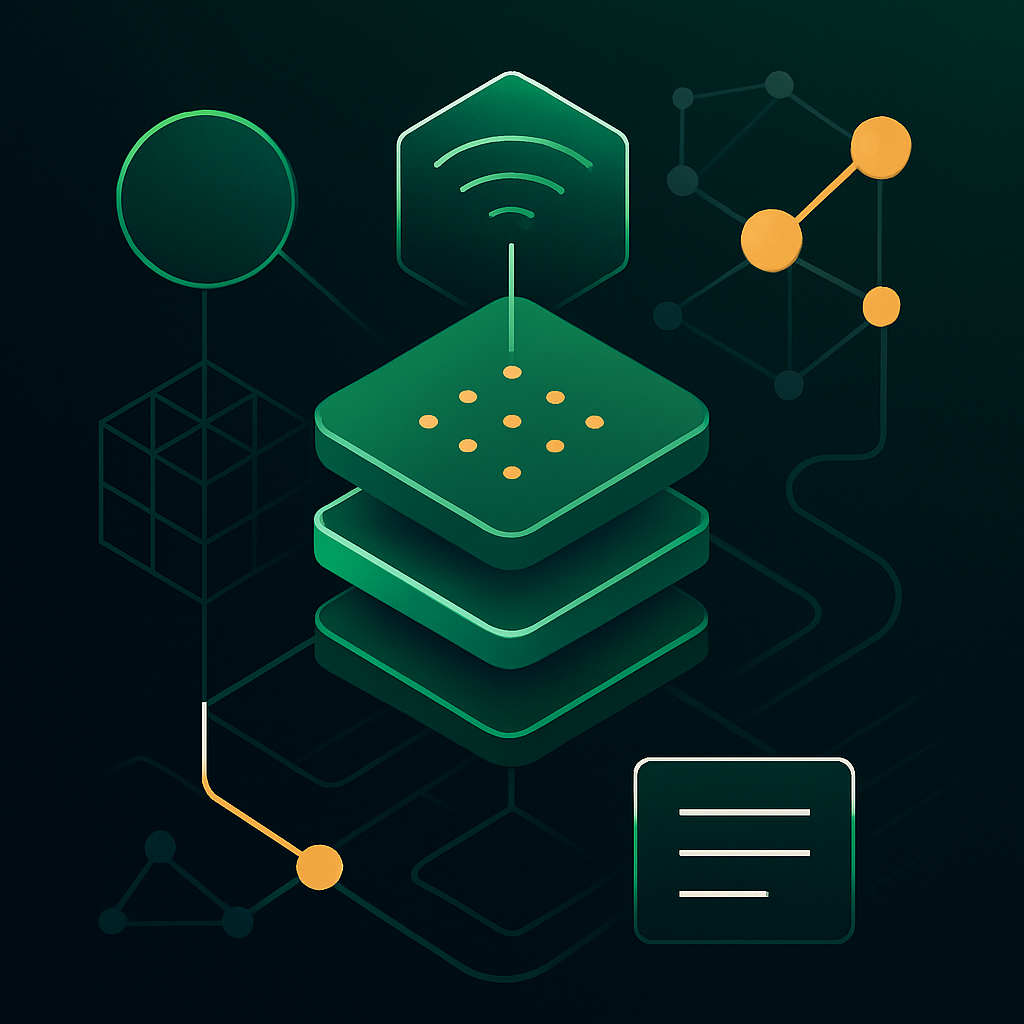
The diagram below illustrates the core layers of a Zero‑Trust Context Architecture supporting MCP‑driven data exchange. The flow proceeds from external data ingestion through segmentation, policy enforcement, and finally into the AI inference engine.
Key takeaways from the diagram:
- All inbound traffic terminates at a mutual TLS gateway, guaranteeing device authenticity.
- Segmentation isolates data domains (e.g., finance vs. HR) using VPC‑level subnetting and network policies.
- The Policy Engine evaluates both role‑based (RBAC) and attribute‑based (ABAC) rules, incorporating dynamic risk signals from a SIEM or an AI‑driven threat model.
- Only authorized contexts are passed to the MCP layer, preserving low latency for downstream LLM inference.
Core Technical Components
Identity & Access Management (IAM) Integration
Adopt an enterprise‑grade IAM platform that supports:
- OAuth 2.0 with JWT access tokens signed by a dedicated HSM.
- Fine‑grained scopes that map directly to context categories (e.g.,
context:finance:read). - Automatic token rotation every 15 minutes to limit replay risk.
When a service requests context via the API, the gateway validates the JWT signature, checks token revocation status against a KMS‑backed blacklist, and then forwards the request to the Policy Engine.
Segmentation & Micro‑Perimeters
Leverage cloud‑native networking constructs such as VPC service controls, security groups, and service mesh sidecars (e.g., gRPC with mTLS). Each micro‑perimeter enforces:
- Network‑level allowlists based on service identity.
- Encryption‑in‑transit using TLS 1.3.
- Telemetry export to a central observability stack (Prometheus + Grafana) for anomaly detection.
Segmentation reduces the blast radius of a compromised credential by >90% in simulated breach drills (Microsoft Azure, 2022).
Policy Engine Architecture
The Policy Engine should be built as a stateless, horizontally scalable service exposing a REST or gRPC endpoint. Recommended patterns:
- Store policies as JSON‑Logic objects in a high‑availability KV store (e.g., Consul).
- Cache frequent decisions in an in‑memory store (e.g., Redis) with a TTL of 30 seconds to preserve sub‑millisecond decision latency.
- Integrate with a DLP engine to auto‑block requests that attempt to exfiltrate PII.
Decision latency should not exceed 5 ms for 99th‑percentile requests, a target verified by load‑testing with OWASP‑compliant test suites.
Context Store & Retrieval
Context data—whether transactional logs, sensor streams, or knowledge graphs—must be stored in a system that supports both CDC for real‑time updates and ELT pipelines for bulk enrichment. Recommended stack:
- Streaming layer: Kafka with CDC connectors for source systems.
- Analytical store: Snowflake or Azure Synapse with columnar storage for fast vector lookups.
- Vector database (e.g., Pinecone, Milvus) for semantic similarity search, exposing a API that the MCP client can query.
Latency budgets:
- Cold vector retrieval < 20 ms.
- Hot cache hits < 2 ms.
Governance, Compliance, and Auditing
Audit Trail Architecture
Every context request must generate an immutable audit record containing:
- Timestamp (UTC, ISO‑8601).
- Requester identity (subject, device fingerprint, JWT ID).
- Requested context attributes (data domain, sensitivity level).
- Policy decision outcome (allow/deny) and rationale.
Persist audit logs in a tamper‑evident write‑once storage (e.g., AWS S3 Object Lock) and forward a copy to a Security Information and Event Management (SIEM) platform for real‑time correlation.
Regulatory Alignment
Zero‑trust design inherently satisfies many control objectives of GDPR, HIPAA, and SOC 2:
- GDPR Art. 25 – Data protection by design: micro‑segmentation and dynamic authorization enforce least‑privilege.
- HIPAA §164.312(a)(2)(iii) – Integrity controls: mTLS and JWT signatures guarantee data integrity.
- SOC 2 Type II – Continuous monitoring: audit‑log streaming to SIEM provides real‑time evidence of control operation.
Map each technical control to the relevant compliance matrix and embed the mapping into the policy‑as‑code repository to simplify audit preparation.
Risk Management Metrics
Adopt a KPI dashboard that tracks:
- Mean Time to Detect (MTTD) – target < 5 minutes.
- Mean Time to Respond (MTTR) – target < 30 minutes.
- Policy violation rate – aim for < 0.1% of total requests.
- Latency impact of security checks – maintain < 10% overhead over baseline AI inference latency.
Quarterly reviews should compare actual metrics against these thresholds, feeding adjustments back into policy refinement loops.
Business Value and ROI Modeling
Cost Avoidance
Data breaches in the AI domain are especially costly because compromised models can be weaponized. The Ponemon Institute estimates an average breach cost of $4.2 M, with a 20% premium for AI‑related incidents. By reducing breach likelihood by 70%, ZTCA can conservatively avoid $588 k per year for a $10 M annual revenue organization.
Operational Efficiency
Traditional access‑request processes involve manual ticketing, averaging 2‑3 hours per request. Automated Zero‑Trust policies cut this to < 5 seconds, translating to a productivity gain of ~1,800 hours annually for a 200‑person data science team. At an average fully‑loaded cost of $120 k per engineer, the annual labor saving exceeds $216 k.
Revenue Enablement
Speedy, secure context delivery enables new business models—personalized product recommendations, real‑time risk scoring, and compliance‑by‑design SaaS offerings. Companies that launch such capabilities within 6 months capture an estimated incremental revenue of 2–4% of their TAM, equating to $2–4 M for a $100 M SaaS business.
Organizational Adoption Roadmap
Phase 1: Foundations (0–3 months)
- Stakeholder alignment: CISO, CTO, Head of Data Science.
- Define data classification taxonomy and map existing sources.
- Select IAM platform and configure MFA/SSO.
- Deploy mTLS gateway in a pilot VPC.
Phase 2: Policy Engine & Segmentation (3–6 months)
- Implement policy‑as‑code repository (GitOps).
- Roll out micro‑perimeters for high‑value data domains.
- Integrate audit‑log streaming to SIEM.
- Conduct red‑team exercises to validate zero‑trust assumptions.
Phase 3: Full‑Scale Context Integration (6–12 months)
- Connect all source systems via CDC pipelines.
- Deploy vector store and configure MCP endpoints.
- Enable dynamic authorization for AI inference requests.
- Establish KPI dashboard and conduct quarterly compliance reviews.
Phase 4: Optimization & Innovation (12+ months)
- Introduce AI‑driven risk scoring to auto‑adjust policy thresholds.
- Experiment with zero‑trust for model‑to‑model communication (MCP between LLMs).
- Continuously refine latency budgets using canary releases.
Common Pitfalls and Mitigation Strategies
- Over‑engineering policies: Too many granular rules increase latency and operational overhead. Mitigate by grouping policies into reusable policy sets and applying them at the segment level.
- Ignoring legacy systems: Legacy applications may lack mTLS support. Use a reverse‑proxy that terminates TLS and injects JWTs on behalf of the legacy client.
- Insufficient observability: Without end‑to‑end tracing, policy violations become “black holes.” Deploy distributed tracing (OpenTelemetry) across the ingestion, segmentation, and MCP layers.
Future Trends
Zero‑trust is evolving toward Zero‑Trust Fabric, where trust decisions are made by collaborative AI agents that continuously assess behavioral anomalies. Anticipate integration points such as:
- Federated identity across multi‑cloud environments using standards like SAML and OIDC.
- Automated policy generation from regulatory rule engines (e.g., NIST 800‑53 mapping).
- Self‑healing micro‑perimeters that automatically quarantine compromised services.
Organizations that embed these capabilities early will differentiate themselves in the AI‑first economy.
Conclusion
Zero‑Trust Context Architecture is not a checkbox but a strategic enabler that aligns security, compliance, and performance for enterprise AI. By grounding the design in a clear policy framework, leveraging modern cryptographic primitives, and measuring outcomes with business‑centric KPIs, senior leaders can champion a secure, scalable, and high‑value AI data ecosystem. The payoff—a resilient architecture, accelerated innovation, and quantifiable risk reduction—justifies the disciplined investment required to implement ZTCA at scale.