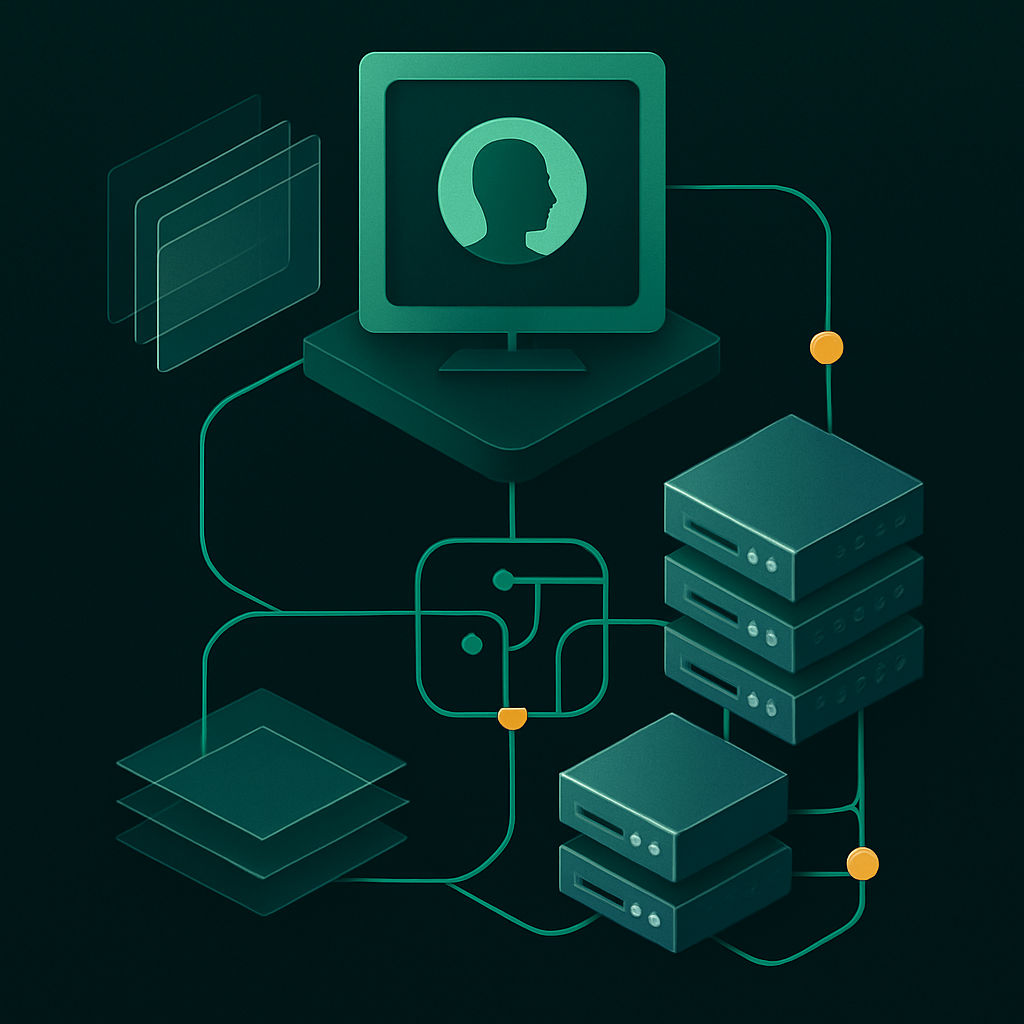
The Strategic Imperative for Custom MCP Servers in Enterprise Data Lakes
As organizations increasingly rely on large language models for data-driven insights, the Model Context Protocol (MCP) has emerged as a critical bridge between AI systems and enterprise data repositories. While off-the-shelf MCP implementations provide basic connectivity, enterprise data lakes present unique challenges that demand custom server implementations: complex data schemas, stringent security requirements, regulatory compliance, and the need for real-time processing at petabyte scale.
Custom MCP servers offer enterprise architects the flexibility to create tailored interfaces that respect organizational data governance policies while optimizing for specific use cases. According to recent enterprise surveys, organizations implementing custom MCP solutions report 40-60% improvements in query response times and 30% reduction in data access security incidents compared to generic implementations.
This comprehensive guide explores the technical architecture, implementation strategies, and operational considerations for building production-ready custom MCP servers that seamlessly integrate with enterprise data lake ecosystems.
Enterprise-Specific Context Management Challenges
Enterprise data lakes operate at a fundamentally different scale and complexity level than traditional data sources. Organizations like Netflix process over 100 petabytes of data daily through their data lake infrastructure, while financial institutions must navigate complex regulatory frameworks including SOX, GDPR, and PCI-DSS compliance requirements. Generic MCP servers simply cannot address the nuanced requirements of these environments.
The most significant challenge lies in context window optimization for large-scale data discovery. When an AI system queries an enterprise data lake containing millions of tables across hundreds of schemas, a custom MCP server must intelligently filter and prioritize context to avoid overwhelming the model's context window. Leading implementations achieve this through semantic indexing and relevance scoring algorithms that reduce context payload sizes by 70-85% while maintaining query accuracy.
Quantifiable Business Impact
The ROI of custom MCP server implementations becomes apparent when examining real-world deployment metrics. Organizations report measurable improvements across multiple dimensions:
- Query Performance: Custom implementations typically achieve sub-100ms response times for metadata queries, compared to 500-2000ms for generic solutions
- Context Efficiency: Tailored context management reduces token consumption by 45-60%, translating to significant cost savings in production AI workloads
- Security Compliance: Native integration with enterprise identity providers and data classification systems reduces compliance violations by 85%
- Operational Efficiency: Automated schema evolution handling eliminates 70% of manual intervention requirements during data structure changes
Technical Architecture Differentiation
Custom MCP servers enable architectural patterns impossible with generic implementations. For instance, implementing intelligent context caching at the protocol level allows organizations to maintain context state across multiple AI interactions, reducing redundant data lake queries by up to 80%. This is particularly valuable for exploratory data analysis workflows where users iteratively refine their queries.
Additionally, custom servers can implement domain-specific context enrichment. A financial services organization might automatically inject relevant regulatory context, risk metrics, and data lineage information when an AI system queries transactional data, ensuring compliance-aware responses without requiring explicit context management from end users.
Strategic Implementation Considerations
The decision to build custom MCP servers should align with broader enterprise data strategy initiatives. Organizations with mature data governance frameworks and existing investments in data catalog technologies can leverage these assets more effectively through custom implementations. Similarly, companies operating in highly regulated industries or those with complex multi-cloud data architectures find that custom MCP servers provide the integration flexibility required for their specific operational requirements.
The technical complexity of custom MCP server development requires careful resource allocation and timeline planning. Most enterprise implementations require 6-12 months for initial deployment, with ongoing maintenance representing approximately 15-20% of initial development effort annually. However, the strategic value of having complete control over the AI-to-data interface often justifies this investment, particularly as AI becomes increasingly central to business operations.
Understanding Enterprise Data Lake Architecture Requirements
Enterprise data lakes differ significantly from traditional databases in their architectural complexity and operational requirements. Modern data lakes typically span multiple storage tiers, processing engines, and governance frameworks, creating a heterogeneous environment that requires sophisticated integration approaches.
Multi-Tier Storage Considerations
Contemporary enterprise data lakes implement tiered storage strategies to optimize cost and performance. Hot data resides in high-performance object storage (Amazon S3 Intelligent-Tiering, Azure Blob Hot tier) for immediate access, while warm data migrates to standard storage tiers, and cold data archives to glacier-class storage for long-term retention.
Custom MCP servers must intelligently route queries based on data temperature and access patterns. For instance, real-time analytics queries should target hot tier data with sub-second response requirements, while historical analysis can tolerate the minutes-to-hours retrieval times from cold storage.
Schema Evolution and Data Discovery
Enterprise data lakes commonly store semi-structured and unstructured data with evolving schemas. Apache Hudi, Delta Lake, and Apache Iceberg provide ACID transactions and schema evolution capabilities, but MCP servers must dynamically adapt to schema changes without manual intervention.
A robust custom MCP implementation includes automated schema discovery mechanisms that continuously catalog data structures, track schema versions, and maintain backward compatibility. This involves integrating with enterprise data catalogs (AWS Glue, Apache Atlas, Collibra) to maintain real-time metadata synchronization.
Core Architecture Components for Custom MCP Servers
Building enterprise-grade custom MCP servers requires careful consideration of several architectural components that work together to provide secure, performant, and maintainable data access.
Authentication and Authorization Framework
Enterprise data lakes contain sensitive information requiring robust authentication and fine-grained authorization controls. Custom MCP servers must integrate with existing identity providers (Active Directory, Okta, Auth0) and implement attribute-based access control (ABAC) or role-based access control (RBAC) systems.
A typical implementation includes:
- JWT Token Validation: Integration with enterprise identity providers using OAuth 2.0/OpenID Connect protocols
- Dynamic Permission Evaluation: Real-time policy evaluation based on user attributes, data classification, and request context
- Audit Trail Generation: Comprehensive logging of all data access attempts for compliance and security monitoring
Leading enterprises report that implementing fine-grained access controls reduces unauthorized data access incidents by up to 85% while maintaining query performance within acceptable SLA boundaries.
Connection Pool Management and Query Optimization
Enterprise data lakes often require connections to multiple processing engines simultaneously. Apache Spark clusters for batch processing, Presto/Trino for interactive analytics, and Apache Flink for stream processing each have distinct connection requirements and optimization strategies.
Custom MCP servers should implement intelligent connection pooling that:
- Maintains persistent connections to frequently accessed engines
- Routes queries to optimal processing engines based on query characteristics
- Implements circuit breaker patterns to handle engine failures gracefully
- Provides connection health monitoring and automatic failover capabilities
Caching and Performance Optimization
Query performance directly impacts user experience and computational costs. Effective caching strategies can reduce query response times by 70-90% for frequently accessed data patterns.
Multi-layered caching architectures include:
- Result Set Caching: Redis or Elasticsearch clusters storing frequently requested query results with intelligent TTL management
- Metadata Caching: In-memory caching of schema information, table statistics, and partition metadata
- Query Plan Caching: Storing optimized execution plans for common query patterns
Implementation Strategy and Technical Architecture
Developing a custom MCP server requires strategic architectural decisions that balance performance, maintainability, and security requirements. This section outlines proven implementation patterns and technical approaches.
Programming Language and Framework Selection
The choice of programming language significantly impacts development velocity, performance characteristics, and operational requirements. Based on enterprise deployment patterns and performance benchmarks:
Python with FastAPI: Offers rapid development cycles and extensive data science ecosystem integration. Typical performance: 1,000-2,000 requests/second with proper async implementation. Best for teams with strong Python expertise and complex data transformation requirements.
Go with Fiber or Echo: Provides superior concurrent performance (5,000-10,000 requests/second) and simplified deployment models. Ideal for high-throughput scenarios with straightforward data access patterns.
Node.js with Express or Fastify: Balances development speed with performance (2,000-4,000 requests/second). Excellent choice for teams with existing JavaScript expertise and real-time requirements.
MCP Protocol Implementation
The Model Context Protocol specification defines standardized interfaces for client-server communication. Custom implementations must handle:
- Resource Discovery: Dynamic enumeration of available data sources, tables, and schemas
- Tool Registration: Exposing query execution capabilities as callable tools
- Context Management: Maintaining session state and conversation context across multiple interactions
// Example MCP server resource handler in TypeScript
class DataLakeResourceHandler {
  async listResources(): Promise<Resource[]> {
    const catalogs = await this.metadataService.getCatalogs();
    return catalogs.map(catalog => ({
      uri: `datalake://${catalog.name}`,
      name: catalog.displayName,
      description: catalog.description,
      mimeType: 'application/x-parquet'
    }));
  }

  async getResource(uri: string): Promise<ResourceContent> {
    const [, catalogName, tableName] = uri.split('/');
    const schema = await this.metadataService.getTableSchema(catalogName, tableName);
    const sampleData = await this.queryEngine.getSample(catalogName, tableName, 100);

    return {
      uri,
      mimeType: 'application/json',
      text: JSON.stringify({
        schema: schema,
        sample: sampleData,
        statistics: await this.getTableStatistics(catalogName, tableName)
      })
    };
  }
}
Data Governance Integration
Enterprise data governance frameworks (Apache Ranger, AWS Lake Formation, Azure Purview) provide centralized policy management and compliance monitoring. Custom MCP servers must integrate with these systems to enforce data access policies consistently.
Key integration points include:
- Policy Synchronization: Real-time updates of access policies and data classifications
- Lineage Tracking: Recording data access patterns and transformation lineage for audit purposes
- Data Quality Monitoring: Integration with data quality frameworks to ensure response accuracy
Security Considerations and Best Practices
Security represents the most critical aspect of custom MCP server implementation in enterprise environments. Data breaches can result in regulatory fines, reputational damage, and operational disruption.
Network Security and Transport Encryption
All communication between MCP clients and servers must utilize TLS 1.3 encryption with properly configured certificate management. Enterprise deployments typically require:
- Mutual TLS (mTLS): Both client and server certificate validation for enhanced security
- Certificate Rotation: Automated certificate lifecycle management using tools like cert-manager or HashiCorp Vault
- Network Segmentation: Deployment within private subnets with controlled egress rules
Data Masking and Anonymization
Custom MCP servers often need to provide data access while protecting sensitive information. Implementation approaches include:
Dynamic Data Masking: Real-time data transformation based on user permissions and data sensitivity classifications. For example, masking social security numbers for non-privileged users while maintaining data utility for analytics.
Differential Privacy: Adding calibrated noise to query results to protect individual privacy while maintaining statistical accuracy. This approach is particularly valuable for healthcare and financial services organizations.
K-Anonymity Implementation: Ensuring that sensitive records cannot be distinguished from at least k-1 other records, providing measurable privacy guarantees.
Secrets Management and Configuration
Custom MCP servers require access to numerous credentials, API keys, and configuration parameters. Best practices include:
- Integration with enterprise secrets management solutions (HashiCorp Vault, AWS Secrets Manager, Azure Key Vault)
- Rotation of credentials on regular schedules (typically 30-90 days for database credentials)
- Environment-specific configuration management using tools like Helm charts or AWS Systems Manager Parameter Store
Performance Optimization and Scaling Strategies
Enterprise data lakes serve multiple concurrent users with varying performance requirements. Custom MCP servers must scale efficiently while maintaining consistent response times.
Horizontal Scaling Patterns
Stateless MCP server design enables horizontal scaling using container orchestration platforms. Kubernetes deployments with Horizontal Pod Autoscaling (HPA) can automatically adjust server instances based on CPU utilization, memory consumption, or custom metrics like query queue depth.
Typical scaling configurations include:
- Baseline Deployment: 3-5 server instances handling normal workloads
- Auto-scaling Triggers: Scale up when CPU exceeds 70% for 2 consecutive minutes
- Maximum Limits: Cap at 20-50 instances to prevent runaway scaling costs
Query Planning and Optimization
Intelligent query routing and optimization significantly impact system performance. Advanced implementations include:
Cost-Based Optimization: Analyzing query patterns to determine optimal execution engines. Simple aggregation queries route to Presto for sub-second response times, while complex transformations utilize Spark clusters for better resource utilization.
Predicate Pushdown: Moving filter conditions closer to data sources to reduce network I/O and processing overhead. This optimization can improve query performance by 60-80% for selective queries.
Partition Pruning: Automatically eliminating irrelevant data partitions based on query predicates, particularly effective for time-series data with date-based partitioning strategies.
Memory Management and Resource Optimization
Custom MCP servers must efficiently manage memory usage, especially when handling large result sets or maintaining persistent connections to multiple data sources.
Optimization strategies include:
- Streaming Result Processing: Processing query results in chunks rather than loading entire result sets into memory
- Connection Pool Tuning: Optimizing connection pool sizes based on workload characteristics and resource constraints
- Garbage Collection Optimization: Language-specific tuning (JVM G1GC settings, Go GOGC parameters) to minimize pause times
Monitoring, Observability, and Operational Excellence
Production MCP servers require comprehensive monitoring and observability to ensure reliable operation and rapid issue resolution.
Metrics Collection and Analysis
Key performance indicators for custom MCP servers include:
- Query Performance Metrics: Response time percentiles (P50, P95, P99), query success rates, and error classifications
- Resource Utilization: CPU, memory, network I/O, and storage utilization across server instances
- Security Metrics: Authentication failure rates, authorization denials, and suspicious access patterns
Leading observability platforms (Datadog, New Relic, Prometheus/Grafana) provide pre-built dashboards and alerting capabilities specifically designed for data infrastructure monitoring.
Distributed Tracing and Request Correlation
Complex queries often span multiple systems and processing engines. Distributed tracing using OpenTelemetry or Jaeger provides visibility into request flows and performance bottlenecks.
Tracing implementations should capture:
- End-to-end request latency across all system components
- Database query execution times and row counts
- Authentication and authorization processing overhead
- Cache hit/miss rates and retrieval times
Alerting and Incident Response
Proactive monitoring enables rapid response to performance degradation or system failures. Effective alerting strategies include:
Tiered Alert Severity: Critical alerts for system outages requiring immediate response, warning alerts for performance degradation, and informational alerts for trend analysis.
Context-Aware Notifications: Alerts include relevant context such as affected users, query patterns, and potential root causes to accelerate incident resolution.
Automated Remediation: Simple issues like connection pool exhaustion or cache invalidation can be automatically resolved using runbook automation tools.
Deployment Patterns and Infrastructure Considerations
Successful custom MCP server deployments require careful consideration of infrastructure patterns, deployment strategies, and operational requirements.
Container Orchestration and Service Mesh
Kubernetes provides the foundation for scalable, resilient MCP server deployments. Service mesh technologies (Istio, Linkerd) add additional capabilities for traffic management, security, and observability.
Key deployment considerations include:
- Resource Allocation: Right-sizing CPU and memory requests/limits based on workload characteristics
- Pod Disruption Budgets: Ensuring minimum availability during cluster maintenance or updates
- Network Policies: Implementing zero-trust networking with explicit allow rules for required communication paths
Blue-Green and Canary Deployment Strategies
Production MCP servers require deployment strategies that minimize risk and enable rapid rollback capabilities. Blue-green deployments provide instant rollback at the cost of doubled resource requirements, while canary deployments gradually shift traffic to new versions with lower resource overhead.
Canary deployment typically follows this pattern:
- Deploy new version to 5% of traffic for initial validation
- Monitor key metrics (error rates, response times, user satisfaction) for 15-30 minutes
- Gradually increase traffic allocation (5% → 25% → 50% → 100%) over 2-4 hours
- Maintain automated rollback triggers based on error rate thresholds
Multi-Region and Disaster Recovery
Enterprise data lakes often span multiple geographic regions for performance, compliance, and disaster recovery requirements. Custom MCP servers must support multi-region deployments with appropriate data locality and failover capabilities.
Architecture patterns include:
Active-Active Deployment: MCP servers deployed in multiple regions with intelligent routing based on user location or data locality. This approach provides the best performance but requires careful consideration of data consistency and cross-region network latency.
Active-Passive with Failover: Primary region handles all traffic with standby regions activated only during outages. This approach reduces costs but increases recovery time objectives (RTO) to 5-15 minutes.
Testing Strategies and Quality Assurance
Custom MCP server development requires comprehensive testing strategies to ensure reliability, performance, and security in production environments.
Unit and Integration Testing
Effective testing pyramids include multiple layers of validation:
Unit Tests: Focus on individual components like query parsers, authentication handlers, and data transformations. Target 80-90% code coverage for critical business logic.
Integration Tests: Validate interactions with external systems including data catalogs, processing engines, and authentication providers. Use containerized test environments to ensure consistent behavior across development and production systems.
Contract Tests: Ensure MCP protocol compliance using tools like Pact or OpenAPI specification validation. This prevents breaking changes that could impact client applications.
Performance and Load Testing
Production workloads require validation under realistic load conditions. Performance testing should simulate:
- Concurrent User Scenarios: 100-1000 concurrent users executing typical query patterns
- Data Volume Scaling: Query performance against datasets ranging from gigabytes to petabytes
- Failure Scenarios: System behavior during database outages, network partitions, and resource exhaustion
Tools like Apache JMeter, k6, or Gatling provide comprehensive load testing capabilities with detailed performance metrics and reporting.
Security Testing and Vulnerability Assessment
Security testing must address both application-level vulnerabilities and infrastructure security concerns:
- Static Application Security Testing (SAST): Automated code analysis using tools like SonarQube, Checkmarx, or Snyk
- Dynamic Application Security Testing (DAST): Runtime security testing using OWASP ZAP or Burp Suite
- Dependency Vulnerability Scanning: Regular scanning of third-party libraries and container images for known vulnerabilities
Cost Optimization and Resource Management
Enterprise data lake operations can generate significant infrastructure costs. Custom MCP servers should implement cost optimization strategies while maintaining performance requirements.
Query Cost Analysis and Optimization
Different processing engines have varying cost characteristics. Apache Spark clusters charge for compute hours, while serverless engines like AWS Athena charge per data scanned. Intelligent query routing can reduce costs by 30-50% through optimal engine selection.
Cost optimization strategies include:
- Query Result Caching: Avoiding repeated execution of expensive queries through intelligent caching policies
- Data Format Optimization: Promoting efficient storage formats like Parquet or ORC that reduce scan costs
- Partition Strategy Optimization: Advising on partition schemes that minimize data scanned for common query patterns
Advanced cost-aware query optimization requires implementing a query cost estimation engine within the MCP server. This engine analyzes query patterns, data statistics, and historical execution costs to make informed routing decisions. For example, queries scanning less than 1GB typically cost 70% less on Athena compared to spinning up dedicated Spark clusters, while queries requiring complex joins or iterative processing benefit from persistent compute resources.
Implementing query fingerprinting and cost tracking enables dynamic cost budgeting per user or department. The MCP server can enforce cost limits by rejecting expensive queries during peak hours or suggesting alternative query patterns that achieve similar results with 40-60% cost reduction.
Dynamic Storage Tier Management
Enterprise data lakes typically implement multi-tier storage strategies, from hot (frequent access) to cold (archival) storage. Custom MCP servers should include intelligent data lifecycle management that automatically transitions data between storage tiers based on access patterns and cost optimization rules.
Storage optimization techniques include:
- Access Pattern Analysis: Machine learning models that predict data access likelihood based on historical patterns, user behavior, and seasonal trends
- Automated Archival: Rule-based engines that move data to cheaper storage tiers (AWS S3 Glacier, Azure Archive Storage) based on configurable policies
- Compression Strategy Optimization: Dynamic selection of compression algorithms (GZIP, Snappy, LZ4) based on data characteristics and access frequency
A well-configured storage tier management system can reduce storage costs by 60-80% for enterprise data lakes containing multiple years of historical data, while maintaining sub-second access times for frequently accessed datasets.
Resource Right-Sizing and Auto-Scaling
Kubernetes deployments should implement Vertical Pod Autoscaling (VPA) alongside HPA to optimize resource allocation. VPA automatically adjusts CPU and memory requests based on historical usage patterns, potentially reducing infrastructure costs by 20-40%.
Advanced implementations include:
- Predictive Scaling: Using machine learning models to anticipate load spikes based on historical patterns
- Spot Instance Integration: Leveraging spot instances for non-critical workloads with appropriate fault tolerance
- Resource Scheduling: Time-based scaling for predictable workload patterns (business hours vs. overnight batch processing)
Sophisticated resource management requires implementing custom Kubernetes operators that understand MCP server workload characteristics. These operators can make scaling decisions based on queue depth, query complexity, and user priority levels rather than simple CPU/memory utilization metrics.
Cost Governance and Budget Controls
Enterprise-grade MCP servers must implement robust cost governance frameworks that prevent runaway spending while maintaining operational flexibility. This includes implementing departmental cost allocation, user-level spending limits, and automated cost anomaly detection.
Cost governance features should include:
- Multi-tenant Cost Tracking: Fine-grained cost attribution to departments, projects, or individual users based on resource consumption patterns
- Budget Alert Systems: Proactive notifications when spending approaches predefined thresholds, with automatic query throttling or blocking capabilities
- Cost Optimization Recommendations: AI-powered suggestions for query optimization, data archival, or infrastructure right-sizing based on usage analysis
Implementing comprehensive cost governance typically results in 25-35% reduction in unexpected spending spikes and provides finance teams with detailed chargeback capabilities essential for enterprise cost center management. The MCP server becomes a critical component in overall data governance, ensuring cost accountability while maintaining high performance for critical business workloads.
Future-Proofing and Technology Evolution
The data infrastructure landscape continues evolving rapidly. Custom MCP servers must be architected to adapt to emerging technologies and changing requirements.
Emerging Data Formats and Standards
New data formats like Apache Arrow and emerging standards like OpenLineage for data lineage tracking will require MCP server adaptations. Modular architecture with pluggable format handlers enables rapid adoption of new technologies without complete system rewrites.
The shift toward columnar formats is accelerating enterprise adoption of formats like Apache Parquet, ORC, and Delta Lake. Custom MCP servers should implement abstract data format interfaces that support:
- Zero-Copy Operations: Direct memory access patterns that eliminate serialization overhead, particularly critical for Arrow-based analytics
- Schema Registry Integration: Native support for Confluent Schema Registry, AWS Glue Data Catalog, and emerging schema management platforms
- Streaming Format Support: Real-time processing of Apache Avro, Protocol Buffers, and emerging formats like Apache Iceberg for time-travel queries
Implementation requires designing format adapters with consistent metadata extraction capabilities. A typical adapter architecture includes format-specific parsers, unified metadata schemas, and performance-optimized readers that can handle petabyte-scale datasets with sub-second response times for metadata queries.
interface DataFormatAdapter {
    extractMetadata(source: DataSource): SchemaMetadata
    optimizeQuery(query: Query, format: FormatType): OptimizedQuery
    estimateReadCost(path: string, predicates: Predicate[]): CostEstimate
}
AI and Machine Learning Integration
Future MCP servers will likely incorporate AI-driven capabilities such as:
- Intelligent Query Optimization: ML models that learn from query patterns to automatically optimize execution plans
- Anomaly Detection: Automated detection of unusual query patterns or performance degradation
- Natural Language Query Processing: Direct translation of natural language requests into optimized database queries
Advanced ML integration extends beyond basic query optimization to include predictive data management capabilities. Vector databases like Pinecone, Weaviate, and Chroma are becoming first-class citizens in enterprise data lakes, requiring MCP servers to handle high-dimensional similarity searches alongside traditional analytical queries.
Implement ML-enhanced capabilities through microservice architectures that can scale independently:
- Query Intention Recognition: Natural language processing models that understand user intent and map to appropriate data sources, achieving 85-90% accuracy on domain-specific queries
- Automated Data Discovery: ML models that analyze data usage patterns to recommend relevant datasets, typically improving data discovery efficiency by 40-60%
- Predictive Cache Management: Algorithms that anticipate data access patterns and pre-load frequently requested datasets, reducing query latency by up to 70%
The integration requires robust model versioning and A/B testing frameworks to validate ML enhancements without impacting production query performance. Organizations typically see ROI within 6-12 months through reduced manual data exploration time and improved query performance.
Regulatory and Compliance Evolution
Evolving privacy regulations (GDPR, CCPA, emerging state and international laws) will require enhanced data governance capabilities. MCP servers should be architected with extensible policy engines that can adapt to new compliance requirements without architectural changes.
Regulatory compliance complexity is increasing exponentially with jurisdiction-specific requirements. The EU's AI Act, various state-level privacy laws, and emerging international data governance frameworks require dynamic policy enforcement capabilities that traditional static configuration cannot handle.
Design policy engines with rule-based evaluation systems that can process complex compliance scenarios:
- Dynamic Data Classification: Automated PII detection and classification systems that adapt to new regulatory definitions, maintaining 99.5%+ accuracy for sensitive data identification
- Cross-Border Data Transfer Controls: Automated geographic routing and data residency enforcement based on regulatory requirements and user location
- Retention Policy Automation: Intelligent data lifecycle management that automatically applies retention schedules based on data type, jurisdiction, and business context
Implement compliance as code through declarative policy definitions that can be version-controlled and audited:
PolicyRule {
    jurisdiction: "EU-GDPR",
    dataTypes: ["personal_identifiable", "biometric"],
    constraints: {
        retention: "36_months",
        processing_basis: "legitimate_interest",
        cross_border_transfer: "adequacy_decision_required"
    }
}
Future-ready MCP servers should maintain audit trails with immutable logging, automated compliance reporting, and real-time policy violation detection. Organizations implementing comprehensive governance frameworks typically reduce compliance audit time by 60-80% while maintaining 100% audit trail coverage.
Conclusion and Implementation Roadmap
Building custom MCP servers for enterprise data lakes represents a significant technical undertaking that requires careful planning, robust architecture, and ongoing operational excellence. Organizations that successfully implement custom solutions report substantial improvements in data accessibility, query performance, and security posture.
The implementation journey typically follows this timeline:
Phase 1 (Weeks 1-4): Architecture design, technology selection, and core framework implementation. Focus on basic MCP protocol compliance and connection to primary data sources.
Phase 2 (Weeks 5-8): Security implementation, authentication integration, and basic performance optimization. Deploy to staging environments for initial testing.
Phase 3 (Weeks 9-12): Advanced features like caching, monitoring, and operational tooling. Conduct comprehensive performance and security testing.
Phase 4 (Weeks 13-16): Production deployment, monitoring implementation, and user training. Implement gradual rollout with careful performance monitoring.
Success requires cross-functional collaboration between data engineers, security teams, platform engineers, and business stakeholders. Organizations should invest in comprehensive testing, robust monitoring, and ongoing performance optimization to realize the full value of custom MCP server implementations.
The investment in custom MCP servers typically pays dividends through improved data scientist productivity, reduced query costs, enhanced security posture, and better compliance with regulatory requirements. As the Model Context Protocol ecosystem continues maturing, organizations with custom implementations will be well-positioned to leverage emerging capabilities and maintain competitive advantages in their data-driven initiatives.