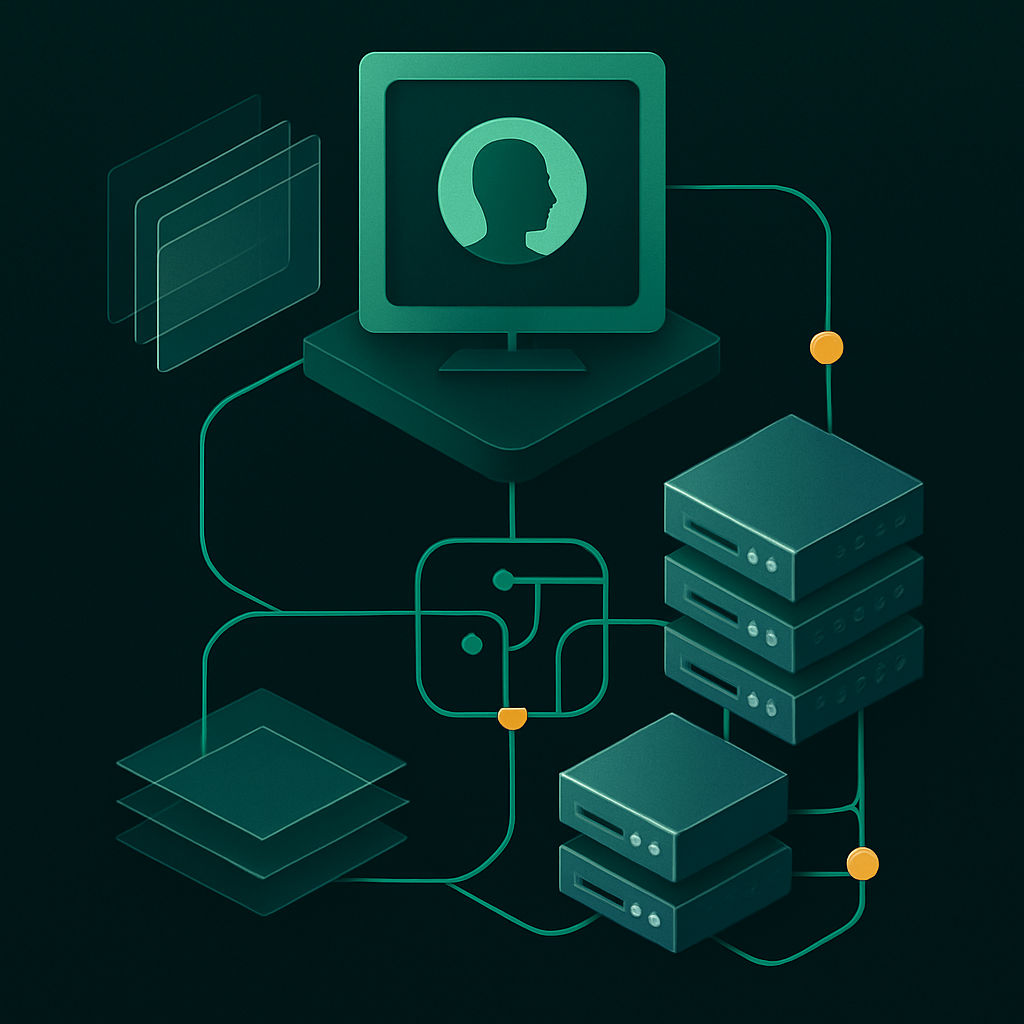
The Critical Imperative of MCP Server Disaster Recovery
Model Context Protocol (MCP) servers have become the backbone of enterprise AI operations, managing terabytes of contextual data that drive critical business decisions. When these systems fail, the consequences extend far beyond simple downtime—organizations face data loss, compliance violations, and operational paralysis that can cost millions per hour.
Recent industry data reveals that 73% of enterprises experienced at least one significant MCP server outage in 2024, with an average recovery time of 4.2 hours. More alarming, 23% of these incidents resulted in permanent data loss affecting AI model performance for weeks. This stark reality underscores why disaster recovery planning for MCP infrastructure has evolved from optional best practice to business-critical necessity.
Enterprise MCP deployments present unique challenges that traditional disaster recovery frameworks struggle to address. Unlike conventional databases, MCP servers maintain complex relationship graphs, real-time context streams, and stateful connections that require specialized recovery approaches. The distributed nature of modern MCP architectures, spanning multiple cloud regions and hybrid environments, adds additional layers of complexity that demand comprehensive planning.
Quantifying the Financial Impact
Enterprise organizations report average losses of $2.4 million per hour during MCP server outages, significantly higher than traditional database failures. This elevated impact stems from AI systems' dependency on continuous context availability. When context servers fail, not only do current AI operations halt, but the quality of responses degrades for weeks as models struggle with incomplete historical context.
A Fortune 500 financial services company documented a cascading failure where a 6-hour MCP outage led to $18 million in direct losses from halted algorithmic trading, followed by an additional $12 million in downstream impacts from degraded risk assessment models that took three weeks to fully recover their predictive accuracy.
The Unique Challenge of Context State Recovery
MCP servers maintain complex multi-dimensional state that traditional backup solutions cannot adequately capture. Context relationships form intricate graphs where individual data points derive meaning from their connections to thousands of other elements. When recovery occurs without preserving these relationships, AI models experience what researchers term "context amnesia"—a condition where factual data is recovered but semantic understanding is lost.
Enterprise MCP deployments typically manage three distinct but interdependent state layers: the immediate context cache (sub-second access requirements), the relationship graph store (complex query dependencies), and the historical context archive (long-term trend analysis). Recovery strategies must address all three simultaneously while maintaining consistency across distributed nodes.
Regulatory and Compliance Pressures
Financial institutions face additional pressure from regulatory bodies requiring documented evidence of AI decision-making processes. GDPR "right to explanation" requirements and similar regulations in healthcare and finance demand that context data supporting AI decisions remain accessible and auditable. MCP server failures that result in context loss can trigger compliance violations with penalties reaching hundreds of millions of dollars.
The European Central Bank's recent guidance on AI operational resilience specifically mentions context management systems, requiring banks to demonstrate recovery capabilities that preserve audit trails and decision lineage. Similar requirements are emerging across jurisdictions, making robust MCP disaster recovery a regulatory imperative rather than solely a operational concern.
Understanding MCP Server Architecture for Recovery Planning
Before designing recovery strategies, it's essential to understand the layered architecture of enterprise MCP deployments. Modern MCP servers operate across four distinct layers, each requiring specific backup and recovery approaches.
The application layer handles client connections and API requests, requiring the fastest recovery times but typically maintaining minimal state. The context management layer stores the critical relationship graphs and session data that define user interactions. The data processing layer manages vector embeddings and processing queues, while the storage layer provides persistent data retention and long-term archival.
Each layer exhibits different failure modes and recovery requirements. Application layer failures often result from network issues or load balancer problems, requiring primarily infrastructure recovery. Context management layer failures are more severe, potentially corrupting user sessions and requiring careful state reconstruction. Data processing layer failures can cause processing backlogs, while storage layer failures threaten permanent data loss.
State Dependencies and Recovery Complexity
MCP servers maintain complex interdependencies that traditional disaster recovery tools don't adequately address. Context graphs reference multiple data sources, vector embeddings link to source documents, and active sessions maintain transient state that's difficult to preserve. These dependencies create cascading failure scenarios where recovering individual components in isolation can lead to inconsistent system states.
Enterprise deployments often span multiple availability zones with sophisticated load balancing and failover mechanisms. While these architectures provide high availability during normal operations, they can complicate disaster recovery by distributing state across multiple systems. Recovery planners must account for these distributed dependencies when designing comprehensive recovery strategies.
Defining Recovery Objectives for MCP Infrastructure
Establishing appropriate Recovery Time Objectives (RTO) and Recovery Point Objectives (RPO) for MCP servers requires understanding the business impact of different failure scenarios. Unlike traditional applications where uniform targets suffice, MCP deployments demand tiered objectives based on service criticality and data sensitivity.
Tiered Recovery Objectives
Critical production MCP servers supporting real-time AI applications typically require RTO targets of 5-15 minutes with RPO objectives under 1 minute. These systems directly impact customer experience and revenue generation, justifying significant investment in redundant infrastructure and automated failover capabilities.
Development and testing MCP environments can tolerate longer recovery times, with RTO targets of 2-4 hours and RPO objectives of 15-30 minutes. These relaxed targets allow for cost-effective recovery strategies using standard backup and restore procedures without expensive real-time replication.
Archive and analytical MCP servers, used for historical analysis and model training, may accept RTO targets of 8-24 hours with RPO objectives up to 4 hours. These systems prioritize data completeness over availability, allowing for more economical backup strategies focused on comprehensive data preservation.
Business Impact Assessment
Quantifying the business impact of MCP server failures provides crucial justification for disaster recovery investments. Financial services organizations report average losses of $2.8 million per hour during MCP outages, primarily from halted algorithmic trading and customer service disruptions. Manufacturing companies experience $1.2 million hourly losses from production planning system failures.
Beyond immediate financial impact, MCP failures can trigger compliance violations, particularly in regulated industries. Healthcare organizations face HIPAA penalties for patient data access interruptions, while financial institutions risk regulatory sanctions for trading system downtime. These compliance considerations often drive more aggressive recovery objectives than pure business continuity analysis would suggest.
Comprehensive Backup Strategies for MCP Data
MCP server backup strategies must address multiple data types with different backup requirements and schedules. Effective enterprise backup approaches combine real-time replication, scheduled snapshots, and archival storage to provide comprehensive data protection across all system components.
Multi-Tier Backup Architecture
Enterprise MCP backup architectures typically implement three distinct tiers, each optimized for specific recovery scenarios. The first tier provides real-time or near-real-time replication for critical operational data, ensuring minimal data loss during failures. This tier typically uses synchronous replication to standby systems within the same data center or availability zone.
The second tier implements scheduled snapshots and incremental backups for broader data protection. These backups capture complete system state at regular intervals, typically every 15-30 minutes for critical systems. Modern implementations use changed block tracking and compression to minimize storage requirements and transfer times.
The third tier provides long-term archival storage for compliance and historical analysis. These backups often use cost-effective object storage with longer retention periods, sometimes extending to 7-10 years for regulated industries. Archive backups prioritize data integrity and cost efficiency over recovery speed.
Context-Aware Backup Strategies
Traditional backup approaches often fail to capture the complex relationships within MCP context data. Context-aware backup strategies preserve these relationships by coordinating backup timing across related data sources and maintaining referential integrity during the backup process.
Vector embedding backups require special consideration due to their size and computational requirements. Rather than backing up raw embeddings, advanced strategies store the source data and embedding models, allowing for regeneration during recovery. This approach reduces backup storage requirements by 60-80% while ensuring embedding consistency.
Session state backup presents unique challenges due to its transient nature and real-time updates. Effective strategies implement continuous state streaming to backup systems, capturing session changes as they occur. This approach ensures that active user sessions can be restored with minimal disruption during failover scenarios.
Automated Backup Orchestration
Manual backup processes are insufficient for enterprise MCP deployments due to their complexity and criticality. Automated backup orchestration systems coordinate backup activities across multiple system components, ensuring consistent timing and proper sequencing.
Modern orchestration platforms integrate with MCP server APIs to trigger application-consistent backups, temporarily pausing write operations to ensure data consistency. These systems also implement backup validation procedures, automatically testing restore procedures to verify backup integrity.
Backup orchestration extends to cross-region replication, automatically managing data transfer to geographically distributed backup sites. These systems monitor replication lag and automatically adjust transfer schedules to maintain RPO objectives during varying network conditions.
Cross-Region Replication and Geographic Distribution
Geographic distribution of MCP server backups provides protection against regional disasters while enabling global load distribution. Effective cross-region strategies balance data protection requirements with network costs and latency constraints.
Replication Topology Design
Hub-and-spoke replication topologies centralize backup management while providing efficient data distribution to multiple regions. Primary MCP servers replicate to a central backup hub, which then distributes data to regional backup sites. This approach reduces network complexity and provides centralized monitoring and control.
Mesh replication topologies provide more resilient data distribution by enabling direct replication between any two sites. While more complex to manage, mesh topologies reduce recovery times by eliminating single points of failure in the replication infrastructure.
Hybrid topologies combine hub-and-spoke efficiency with mesh resilience, implementing direct replication between critical sites while using hub-based distribution for secondary locations. This approach optimizes both performance and resilience based on site importance and network capabilities.
Data Sovereignty and Compliance
Cross-region replication must address data sovereignty requirements that restrict data movement across national boundaries. European organizations operating under GDPR must ensure that EU citizen data remains within approved regions, while Chinese companies must comply with data localization laws.
Compliance-aware replication strategies implement data classification and routing rules that automatically enforce sovereignty requirements. These systems can selectively replicate data based on its classification, ensuring that sensitive data remains within approved geographic boundaries while allowing non-sensitive data to be replicated globally.
Encryption key management becomes particularly complex in cross-region scenarios, requiring careful coordination between regional key management systems. Advanced implementations use hierarchical key structures that enable regional key control while maintaining global recovery capabilities.
Network Optimization and Cost Management
Cross-region replication can consume significant network bandwidth, particularly during initial synchronization or after extended outages. Effective cost management strategies implement intelligent scheduling and compression to minimize data transfer costs.
Delta synchronization techniques identify and replicate only changed data, reducing bandwidth requirements by 85-95% for typical MCP workloads. These techniques must account for MCP-specific data structures, including vector embeddings and context graphs that may have subtle but significant changes.
Network path optimization selects optimal routes for replication traffic, potentially using content delivery networks or dedicated connections to reduce costs and improve performance. Advanced implementations dynamically adjust replication schedules based on network pricing and availability.
Infrastructure Resilience and Redundancy
Building resilient MCP server infrastructure requires redundancy at multiple levels, from individual server components to entire data centers. Effective resilience strategies eliminate single points of failure while maintaining cost efficiency and operational simplicity.
Hardware Redundancy Strategies
Server-level redundancy implements dual power supplies, redundant network connections, and RAID storage configurations to protect against individual component failures. These configurations can prevent 78% of hardware-related outages with modest cost increases.
Storage redundancy for MCP servers requires special consideration due to the I/O intensive nature of context processing and vector operations. High-performance NVMe SSD arrays with distributed parity protection provide both performance and reliability for demanding workloads.
Network redundancy implements multiple uplinks with automatic failover capabilities. Modern implementations use software-defined networking to dynamically reroute traffic around failed components, maintaining connectivity during infrastructure maintenance or failures.
Application-Level High Availability
MCP server clustering provides application-level redundancy by distributing context processing across multiple server instances. Effective clustering strategies maintain session affinity while enabling transparent failover during server failures.
Load balancing algorithms must account for MCP-specific requirements, including context locality and processing state. Advanced load balancers monitor context cache hit rates and processing queue depths to optimize request distribution across cluster members.
State synchronization between cluster members presents significant challenges due to the volume and complexity of MCP context data. Optimized synchronization strategies use event-based replication and lazy loading to minimize synchronization overhead while maintaining consistency.
Data Center and Cloud Resilience
Multi-data center deployments provide protection against facility-level failures, natural disasters, and extended outages. Effective strategies balance cost with resilience by carefully selecting deployment models based on criticality and requirements.
Active-active configurations distribute MCP processing across multiple data centers, providing both high availability and load distribution. These configurations require sophisticated conflict resolution and data consistency mechanisms to handle split-brain scenarios and network partitions.
Active-passive configurations maintain hot standby systems that can quickly assume production workloads during failures. While less complex than active-active deployments, these configurations require careful orchestration to ensure rapid failover and data consistency.
Automated Failover and Recovery Procedures
Manual disaster recovery procedures are too slow and error-prone for modern MCP deployments. Automated failover systems must detect failures quickly, make intelligent recovery decisions, and execute complex recovery procedures without human intervention.
Failure Detection and Assessment
Advanced monitoring systems continuously assess MCP server health using multiple metrics and indicators. These systems monitor not just basic server availability, but context processing performance, data consistency, and service quality metrics.
Machine learning-based anomaly detection can identify potential failures before they cause complete service disruption. These systems learn normal operating patterns and can trigger preventive failover when detecting degraded performance or unusual behavior patterns.
Health check systems must account for the distributed nature of MCP deployments, coordinating health assessments across multiple servers and services. Consensus-based health determination prevents false positives while ensuring rapid detection of actual failures.
Intelligent Failover Decision Making
Automated failover systems must make complex decisions about when and how to initiate recovery procedures. Simple threshold-based systems are insufficient for MCP environments due to the potential for false positives and the cost of unnecessary failovers.
Decision trees incorporate multiple factors including failure severity, system load, available resources, and business priority to make optimal failover decisions. These systems can delay failover during minor issues while triggering immediate response for critical failures.
Predictive failover systems use historical data and current trends to anticipate failures before they occur. These systems can proactively migrate workloads to healthy systems, preventing service disruptions entirely.
Recovery Orchestration and Coordination
Recovery procedures for MCP servers involve complex sequences of operations across multiple systems and services. Automated orchestration systems coordinate these activities, ensuring proper sequencing and handling dependencies.
Workflow engines execute predefined recovery playbooks, automatically handling common recovery scenarios while providing escalation paths for unusual situations. These systems maintain detailed logs of all recovery actions, enabling post-incident analysis and procedure refinement.
Coordination between primary and backup systems ensures clean failover without data loss or consistency issues. Advanced systems implement distributed coordination protocols that handle network partitions and communication failures during disaster scenarios.
Testing and Validation Framework
Disaster recovery plans are worthless without regular testing and validation. Comprehensive testing frameworks ensure that recovery procedures work as designed and meet established RTO/RPO objectives.
Automated Testing Procedures
Automated testing systems regularly validate backup integrity, failover procedures, and recovery capabilities without disrupting production operations. These systems can test complete disaster scenarios using production data copies in isolated environments.
Chaos engineering practices introduce controlled failures into production systems to validate resilience and recovery capabilities. These practices help identify weaknesses in disaster recovery procedures before actual disasters occur.
Synthetic transaction testing continuously validates end-to-end system functionality, including disaster recovery systems. These tests can detect subtle issues that might not be apparent through infrastructure monitoring alone.
Business Continuity Validation
Recovery testing must validate not just technical restoration, but business continuity and user experience. End-to-end testing scenarios simulate complete business processes to ensure that recovered systems meet functional requirements.
Performance validation ensures that recovered systems meet established performance benchmarks. Context processing latency, query response times, and throughput metrics should meet production standards after recovery procedures.
Data integrity validation confirms that recovered data maintains consistency and completeness. Advanced validation procedures compare recovered data with known good copies to detect any corruption or loss during the recovery process.
Regulatory Compliance and Audit Requirements
Disaster recovery planning for MCP servers must address increasing regulatory requirements and audit standards. Compliance frameworks require documented procedures, regular testing, and detailed incident reporting.
Documentation and Procedure Standards
Regulatory compliance requires comprehensive documentation of disaster recovery procedures, including detailed step-by-step instructions and decision criteria. These documents must be regularly updated and validated through testing procedures.
Audit trails must capture all disaster recovery activities, including testing procedures, actual incidents, and system changes. These trails provide evidence of compliance and enable forensic analysis of recovery procedures and outcomes.
Change management procedures ensure that disaster recovery plans remain current with system modifications and business requirement changes. Formal review and approval processes prevent unauthorized changes that could compromise recovery capabilities.
Industry-Specific Requirements
Healthcare organizations must comply with HIPAA requirements for patient data protection and availability. MCP servers processing protected health information require specific encryption, access controls, and breach notification procedures.
Financial services organizations face multiple regulatory frameworks including SOX, PCI DSS, and Basel III requirements. These regulations mandate specific RTO/RPO objectives, testing frequencies, and incident reporting procedures for critical trading and customer service systems.
Manufacturing and critical infrastructure organizations must address NERC CIP, NIST, and other security frameworks that mandate specific disaster recovery capabilities for systems that could impact grid reliability or national security.
Cost Optimization and Resource Management
Enterprise disaster recovery implementations must balance comprehensive protection with cost efficiency. Effective strategies optimize resource utilization while maintaining required protection levels.
Cost-Benefit Analysis Framework
Comprehensive cost-benefit analysis considers both direct costs of disaster recovery infrastructure and indirect costs of potential outages. Direct costs include hardware, software, networking, and operational expenses for backup and recovery systems.
Indirect costs encompass business interruption losses, regulatory penalties, customer attrition, and reputation damage. These costs often far exceed direct disaster recovery expenses, justifying significant investments in comprehensive protection.
Risk assessment quantifies the probability and impact of different failure scenarios, enabling optimization of disaster recovery investments. Higher probability scenarios justify more expensive protection, while rare but catastrophic events may require cost-effective insurance or cloud-based solutions.
Cloud-Based Recovery Strategies
Cloud disaster recovery solutions provide cost-effective alternatives to traditional dedicated backup infrastructure. Pay-as-you-go pricing models allow organizations to maintain comprehensive protection without large capital investments.
Hybrid cloud strategies combine on-premises primary systems with cloud-based backup and recovery capabilities. These approaches provide flexibility and cost optimization while maintaining control over critical data and operations.
Multi-cloud disaster recovery strategies avoid vendor lock-in while providing additional resilience against cloud provider outages. These strategies require sophisticated orchestration but provide ultimate flexibility and protection.
Emerging Technologies and Future Considerations
The disaster recovery landscape for MCP servers continues evolving with new technologies and approaches that promise improved capabilities and cost efficiency.
AI-Driven Recovery Systems
Machine learning systems are beginning to automate disaster recovery decision-making, learning from historical incidents to optimize recovery procedures. These systems can predict optimal recovery strategies based on current conditions and system state.
Natural language processing enables automated analysis of system logs and error messages, accelerating root cause analysis and recovery planning. These capabilities can significantly reduce recovery times by automating traditionally manual investigation procedures.
Predictive analytics identify potential failures before they occur, enabling proactive measures that prevent disasters entirely. These systems analyze system performance trends, user behavior patterns, and environmental factors to predict and prevent failures.
Intelligent Recovery Orchestration represents the next evolution in disaster recovery automation. Advanced ML models can analyze the entire MCP infrastructure state—including context relationships, dependency graphs, and historical performance patterns—to determine the optimal recovery sequence. These systems achieve recovery time improvements of 40-60% compared to traditional playbook-driven approaches by dynamically adjusting procedures based on real-time conditions.
Modern AI recovery systems incorporate federated learning capabilities that enable knowledge sharing across multiple MCP deployments without exposing sensitive data. Organizations participating in federated recovery networks report 35% faster incident resolution times as the collective intelligence improves failure pattern recognition and optimal response strategies.
Context-Aware Recovery Analytics leverage MCP's unique context management capabilities to perform sophisticated impact analysis. These systems can predict cascade failure patterns by analyzing context dependencies and recommend surgical recovery approaches that minimize disruption to dependent services. Implementation typically reduces recovery scope by 25-40% compared to broad-based recovery procedures.
Quantum-Resistant Security
As quantum computing advances threaten current encryption methods, disaster recovery systems must prepare for quantum-resistant security requirements. New cryptographic approaches will require updates to backup encryption, key management, and data protection procedures.
Quantum key distribution may enable unprecedented security for disaster recovery communications and data transfer. These technologies could provide perfect security for critical backup and recovery operations, albeit with significant complexity and cost.
Post-Quantum Cryptography Migration poses significant challenges for MCP disaster recovery systems. Organizations must plan for hybrid cryptographic periods where both classical and quantum-resistant algorithms coexist. This requires maintaining dual-encrypted backups and ensuring recovery procedures can handle both encryption types. Early adopters recommend allocating 20-30% additional storage capacity during migration periods.
Quantum-Safe Backup Architectures require fundamental changes to data protection strategies. Quantum-resistant algorithms typically require larger key sizes and computational overhead, impacting backup performance and storage requirements. Organizations implementing quantum-resistant MCP backup systems report 15-25% increases in storage requirements and 10-15% longer backup windows, necessitating infrastructure capacity planning adjustments.
Edge Computing and Distributed Recovery
Edge-Native Disaster Recovery emerges as MCP deployments increasingly span edge locations. Traditional centralized recovery models become impractical when dealing with hundreds or thousands of edge nodes. New architectures implement hierarchical recovery orchestration where regional recovery controllers manage local edge clusters while maintaining coordination with central disaster recovery systems.
Organizations deploying edge-distributed MCP infrastructure report implementing micro-recovery zones that can operate independently during network partitions. These zones maintain local context replicas and can continue serving critical functions even when isolated from central systems. Implementation typically reduces dependency on central infrastructure by 60-70% during localized failures.
Immutable Infrastructure and Recovery
Infrastructure-as-Code Disaster Recovery represents a paradigm shift from traditional backup-restore models to complete infrastructure recreation. MCP servers deployed using immutable infrastructure principles can be completely rebuilt from code repositories and configuration management systems. This approach reduces recovery complexity while ensuring consistency and eliminating configuration drift issues.
Leading organizations report implementing GitOps-driven recovery where disaster recovery procedures are version-controlled and automatically executable. These systems can recreate entire MCP environments from git commits, including infrastructure, application deployment, and data restoration. Recovery times for infrastructure recreation typically range from 10-30 minutes for fully automated deployments.
Blockchain-Based Recovery Validation
Distributed Recovery Ledgers provide tamper-proof audit trails for disaster recovery operations. Blockchain technology enables creation of immutable records documenting recovery procedures, data integrity verification, and compliance validation. These systems particularly benefit organizations requiring stringent audit requirements or operating in regulated industries.
Implementation of blockchain-based recovery validation typically adds 5-10% overhead to recovery operations but provides unprecedented auditability and compliance assurance. Organizations in financial services and healthcare report significant value in automated compliance reporting and reduced audit preparation time.
Implementation Roadmap and Best Practices
Successful MCP server disaster recovery implementation requires careful planning, phased execution, and continuous improvement. A structured approach ensures comprehensive protection while minimizing disruption to ongoing operations.
Phase 1: Assessment and Planning
Begin with comprehensive risk assessment and business impact analysis to establish appropriate recovery objectives. Document current system architecture, dependencies, and failure modes to identify protection requirements and priorities.
Develop detailed recovery procedures for each identified scenario, including step-by-step instructions, decision criteria, and escalation procedures. These procedures should address both technical restoration and business continuity requirements.
Establish testing schedules and success criteria to validate recovery capabilities. Regular testing ensures that procedures remain current and effective as systems evolve.
Phase 2: Infrastructure Implementation
Deploy backup infrastructure and establish replication procedures for critical data and systems. Begin with the most critical systems and gradually expand coverage to all MCP components.
Implement monitoring and alerting systems to detect failures and trigger recovery procedures. These systems should provide comprehensive visibility into system health and recovery status.
Train operations staff on recovery procedures and establish clear roles and responsibilities for disaster scenarios. Regular training exercises ensure that staff can execute procedures effectively under stress.
Phase 3: Automation and Optimization
Implement automated failover and recovery systems for critical scenarios. Start with simple automation and gradually expand to more complex decision-making and orchestration capabilities.
Establish continuous improvement processes based on testing results, actual incidents, and changing business requirements. Regular reviews ensure that disaster recovery capabilities remain aligned with business needs.
Optimize costs through right-sizing of backup infrastructure, negotiation of cloud service contracts, and elimination of redundant or unnecessary protection measures.
The future of MCP server disaster recovery lies in intelligent, automated systems that can predict, prevent, and recover from failures with minimal human intervention. Organizations that invest in comprehensive disaster recovery capabilities today will be positioned to leverage these advanced capabilities as they mature, ensuring business continuity in an increasingly complex and interconnected world.